Binance System Outage Triggers Liquidation Debate
Binance's system slowdown during heavy market volatility has triggered fresh concerns over leveraged trading, collateral risk, exchange transparency, and user protection.
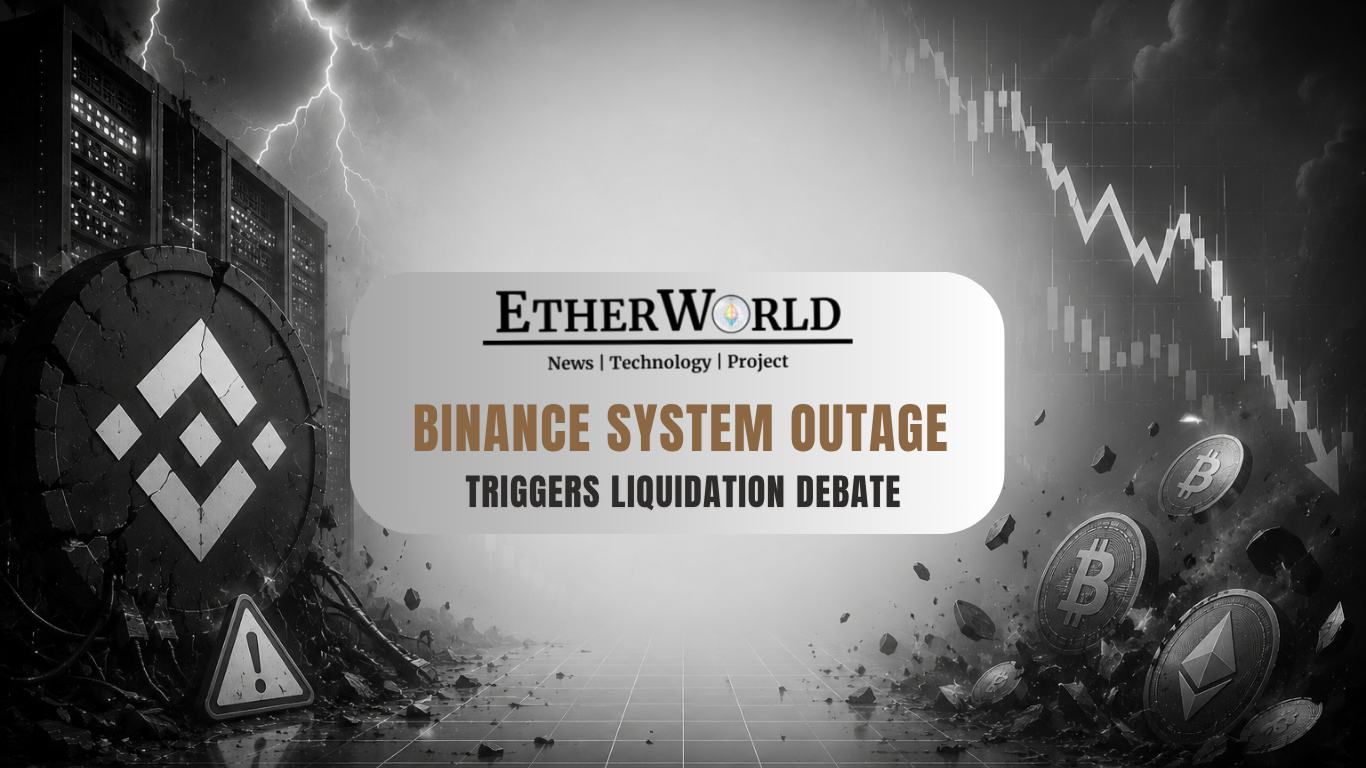
Binance is facing renewed criticism after a major system slowdown during extreme market volatility led traders to claim that they were unable to manage leveraged positions before liquidation. The incident has quickly become one of the most discussed exchange reliability debates in crypto, with users questioning whether the damage came only from market conditions or whether technical failures inside Binance’s trading infrastructure made the situation worse.
The controversy began after Binance acknowledged that its systems were under high load due to heavy market activity. The exchange said some users could experience intermittent delays or display issues while its teams worked to resolve the situation. Binance also repeated its familiar assurance that “Funds are SAFU.” However, for leveraged traders, the issue was not only whether funds were held safely. The bigger question was whether traders could access accounts, move collateral, close positions, and execute risk-management decisions at the moment they needed those tools most.
This debate arrives at a time when the crypto market is already sensitive to exchange reliability, derivatives risk, and stablecoin collateral design. EtherWorld has previously covered the risks of high-leverage trading in India’s Top Broker Raises Red Flag on Unregulated Crypto Derivatives, the importance of platform safety in After CoinDCX: Where Should Indian Crypto Users Actually Trade?, and broader institutional stablecoin activity in BlackRock Adds Ethena USDe to Aladdin Platform.
- Binance Confirms High Load as Traders Report Disruptions
- Why Liquidations Became the Core Controversy
- USDe, Collateral Risk & Exchange Pricing Concerns
- What the Incident Means for Crypto Market Trust
Binance Confirms High Load as Traders Report Disruptions
Binance’s public explanation was simple: heavy market activity placed its systems under high load, causing intermittent delays and display problems for some users. In normal market conditions, such an update may have been treated as a temporary technical issue. But during a fast-moving liquidation event, even short delays can become extremely serious.
Crypto derivatives traders rely on speed. A few minutes can decide whether a position survives or gets liquidated. When prices move sharply, users often need to add margin, transfer funds from spot wallets to futures accounts, reduce leverage, close positions, or trigger stop-loss orders. If the interface freezes, the API slows down, or balances do not update correctly, traders may lose the ability to protect themselves.
That is why the Binance incident has triggered stronger reactions than a routine outage. The concern is not just that Binance slowed down. The concern is that the slowdown reportedly happened during the exact window when users needed access most.
This fits into a broader pattern across crypto markets, where centralized exchanges act as both trading venues and risk engines. They host order books, manage collateral, enforce liquidation rules, calculate margin, and provide the interface through which users respond to market stress. When that infrastructure fails or slows, users are not merely inconvenienced. They may be financially exposed.
EtherWorld has explored similar concerns around platform reliability and user protection in CoinDCX Launches Digital Suraksha Network and CoinDCX Announces ₹100 Crore Cyber Safety Push After Fraud Case Fallout. Those reports focused on cyber safety and user protection in India, but the Binance debate shows the same principle at global scale: crypto users need more than asset custody; they need reliable infrastructure under stress.
Why Liquidations Became the Core Controversy
The strongest criticism around the incident is linked to liquidations. Several traders and commentators claimed that Binance’s system delays contributed to forced liquidations because users could not manage risk in real time. A widely circulated analysis alleged that the exchange’s margin architecture helped create conditions for cascading losses by allowing certain yield-bearing assets and synthetic stablecoins to be used as collateral.
These claims remain disputed and should be treated carefully. Binance has not confirmed the more serious allegations around liquidation mechanics, oracle failure, or collateral pricing. Still, the discussion has gained attention because it touches a known weakness in leveraged crypto markets: liquidation systems work automatically, while human users depend on exchange access to react.
In a leveraged trade, the exchange does not wait for a user to regain access. If margin falls below the required threshold, the position can be liquidated. That may be reasonable from a risk-management perspective, because exchanges must protect themselves and other market participants from bad debt. But the situation becomes controversial when users argue that the platform’s own slowdown prevented them from preventing liquidation.
This is why the incident has revived the debate around extreme leverage. As EtherWorld discussed in India’s Top Broker Raises Red Flag on Unregulated Crypto Derivatives, high leverage can turn small price movements into complete losses. In crypto, where large intraday moves are common, leverage magnifies both opportunity and danger.
The Binance case also raises another question: should exchanges offer products that depend on instant execution if their systems can become unreliable during peak volatility? This is not only a Binance-specific question. It applies to every centralized platform offering futures, perpetual swaps, margin trading, cross-collateral systems, and automated liquidation engines.
EtherWorld has also covered alternative trading models such as Coinbase Challenges Uniswap & Binance with Verified Pools, Onchain Trading Made Simple, where the conversation shifts toward transparency, user control, and onchain execution. The Binance outage may push more users to compare centralized exchange convenience with the transparency trade-offs of onchain markets.
People asked me why are we in a crypto bear market:
— Wei (@thedaoofwei) July 1, 2026
1. ALL the whales got nuked going into Uptober on Oct 10/11
2. Lack of transparency from Binance (see below), so people still dont 100% trust their system wont crash again if Trump makes another statement on a weekend. (We… https://t.co/td4I12XEPt
USDe, Collateral Risk & Exchange Pricing Concerns
One of the most debated parts of the Binance liquidation controversy involves Ethena’s USDe. Social media discussions alleged that USDe’s price on Binance fell much more sharply than on other venues during the volatility window, affecting users who had used it as collateral. According to the circulating claims, the issue was not simply that the market crashed, but that Binance’s pricing or oracle system may have marked collateral lower than broader market pricing.
This allegation remains unverified, but it has become central to the debate because collateral pricing is critical in margin markets. If an asset used as collateral is suddenly marked down, a trader’s margin value falls. If margin value falls too far, liquidation can occur even if the trader’s broader portfolio still appears solvent elsewhere.
The controversy is especially important because USDe has recently become more prominent in institutional and DeFi discussions. EtherWorld reported in BlackRock Adds Ethena USDe to Aladdin Platform that USDe’s integration into institutional infrastructure signaled growing interest in synthetic stablecoin models. But the Binance debate shows the other side of innovation: when new collateral types are used inside leveraged trading systems, exchanges must be extremely careful about pricing, liquidity, oracle design, and stress testing.
Stablecoin infrastructure has become a recurring theme across the market. EtherWorld has also covered Over 140 Firms Unite to Launch Open USD Stablecoin for Global Business Payments, TRON Stablecoin Transfers Hit $167B Daily Peak, and How Banks Are Turning Dollars into Digital Tokens, A Look at Stablecoins. These developments show that stablecoins are no longer simple trading tools. They are becoming payment rails, collateral assets, liquidity instruments, and institutional products.
That makes exchange risk management more important. If a stablecoin or synthetic dollar asset is used only for payments, a temporary pricing issue is serious but limited. If the same asset is used as margin collateral across leveraged positions, a pricing issue can trigger forced selling, liquidation cascades, and broader confidence loss.
This is why traders are demanding more transparency from Binance. They want to know whether affected markets used fair cross-venue pricing, whether oracles behaved correctly, whether users were compensated, and whether liquidation engines continued operating while user-facing systems slowed down.
What the Incident Means for Crypto Market Trust
The Binance outage has become bigger than one technical slowdown because Binance remains one of the most important liquidity venues in global crypto markets. When a major exchange experiences stress, the effect is psychological as well as technical. Traders begin asking whether their positions are safe, whether exchange pricing can be trusted, and whether centralized platforms provide enough transparency during extreme volatility.
This matters for market structure. If traders lose trust in centralized exchanges, liquidity may fragment across platforms, move onchain, or retreat altogether. That can make markets thinner, more volatile, and more difficult to navigate. The discussion also affects institutional adoption, because professional investors require reliable execution, clear post-incident reporting, and predictable risk systems.
EtherWorld has tracked the broader move toward institutional crypto exposure through reports such as Moscow Exchange Launches New Crypto Benchmark Indices, Tokenized RWAs Surpassed $30 Billion In Early 2026, and Parliament Finance Panel to Meet RBI Over Crypto Regulations on July 2. These stories show that crypto is moving closer to regulated finance, but incidents like this remind the market that infrastructure maturity remains uneven.
For Binance, the immediate challenge is transparency. A detailed post-incident report could help answer key questions: What systems slowed down? Which products were affected? Were liquidation engines operating normally? Were collateral transfers delayed? Were oracle prices accurate? Were any users compensated? Without answers, the narrative will continue to be shaped by screenshots, trader losses, and social media speculation.
For users, the lesson is more direct. Leverage carries platform risk, not just price risk. A trader may be correct about market direction and still lose if collateral transfer systems fail, pricing feeds behave unexpectedly, or the interface becomes unusable. This is why risk management must include exchange selection, collateral choice, position sizing, and the possibility that platforms may not work perfectly during market stress.
If you find any issues in this article or notice missing information, please feel free to reach out at team@etherworld.co for clarifications or updates.
To promote your Web3 articles, events, and projects, you may reach out anytime via EtherWorld PR for submissions and collaboration.
Related Articles
- India’s Top Broker Raises Red Flag on Unregulated Crypto Derivatives
- BlackRock Adds Ethena USDe to Aladdin Platform
- After CoinDCX: Where Should Indian Crypto Users Actually Trade?
- Coinbase Challenges Uniswap & Binance with Verified Pools, Onchain Trading Made Simple
- CZ Praises Hyperliquid's No-KYC Crypto Model
To follow blockchain news, track Ethereum protocol progress, and read our latest stories, subscribe to our weekly today.
Disclaimer: The information contained in this website is for general informational purposes only. The content provided on this website, including articles, blog posts, opinions, & analysis related to blockchain technology & cryptocurrencies, is not intended as financial or investment advice. The website & its content should not be relied upon for making financial decisions. Read full disclaimer & privacy policy.
To stay updated on blockchain news, Ethereum protocol progress, and our latest stories, subscribe to our weekly digest and YouTube channel for ELI5 content.
To promote your Web3 articles, events, project updates, and Press Releases, reach out anytime via EtherWorld PR for submissions and collaboration. For other queries, email contact@etherworld.co.
If you’d like to support our work, share the content and consider donating at avarch.eth.
Join our community on Discord and follow us on Twitter, Facebook, LinkedIn & Instagram.

 ×
×

Author

Yash Kamal Chaturvedi is a Blockchain Content & Ops Specialist at Avarch LLC, writing on Ethereum & governance since 2021. Covers ACD/ACDE calls, EIPs, upgrades, staking, security & ecosystem trends.