Is Crypto Dying, or Is the Speculation Era Finally Ending?
Is crypto dying, or is it finally maturing? Explore why NFTs, GameFi, and the metaverse declined while stablecoins and tokenized assets continue to gain traction.

For the majority of a decade, cryptocurrency has been measured by its most prominent stories. Virtual land, play-to-earn games, and decentralised social networks promised to revolutionise the internet, marking the future. One year, NFTs were selling for millions. Every fresh story drew billions of dollars in funding and persuaded many that the next big thing in blockchain technology had arrived. Most of such stories have been lost in modern times.
However, at the same time, tokenised assets are attracting institutional attention, stablecoins are handling record transaction volumes, and blockchain is being increasingly investigated as a financial infrastructure rather than a speculative playground. So, is the cryptocurrency market truly dying, or is it at last transcending the hoopla that formerly characterised it?
The "Crypto Is Dying" Argument
The phrase "crypto is dead" reappears each time it goes through a difficult period. It showed up after exchange collapses, during long bear markets, and after speculative bubbles burst. Since the industry appears to be smaller and quieter than it was in 2021, the argument seems a little stronger this time. Social media enthusiasm has subsided, venture capital is more circumspect, and a number of the most prominent Web3 concepts have lost prominence.
That is a reasonable response. Almost any blockchain idea could garner attention during the previous bull market if it sounded ambitious enough. Because it seemed like the next great thing was always coming, investors poured money into NFT marketplaces, metaverse platforms, blockchain games, decentralised social networks, and a long list of other firms. Money, users, headlines, and confidence all seemed to move in parallel with rising token prices.
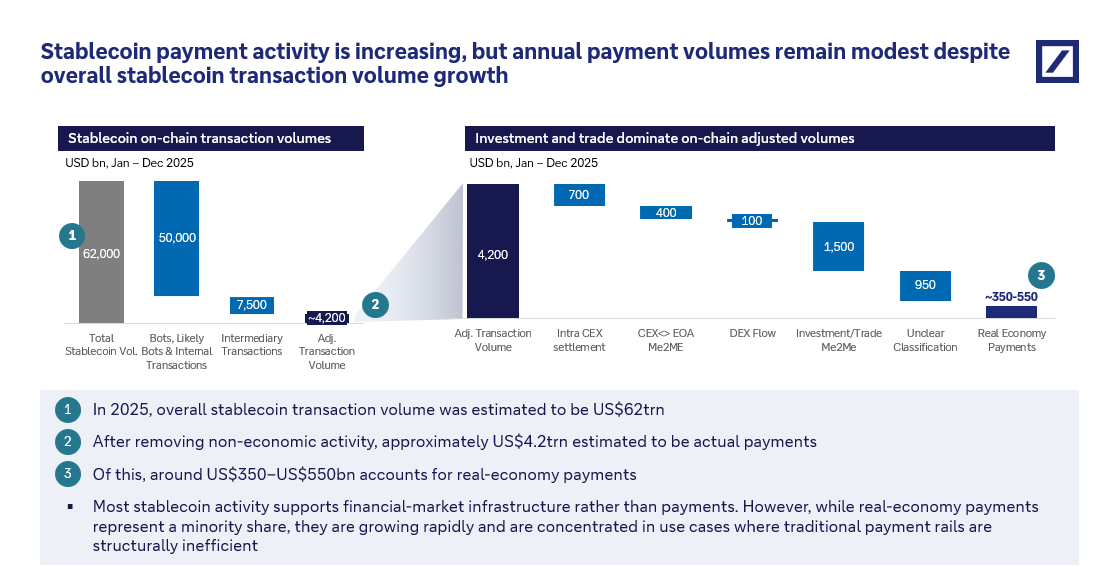
Source: Deutsche Bank - Digital Assets Outlook 2026
That model's flaw was that a large portion of the growth was based on excitement rather than long-term demand. People rushed in when prices were soaring. Due to the lack of the incentive that attracted them, many of them left as soon as prices dropped. That revealed a straightforward but crucial fact, i.e., creating something that people actually need is not the same as drawing in speculative funds.
Cryptocurrency is not the first technology to experience this. In theory, big ideas frequently move more quickly than in practice. The internet developed a bubble of its own. Although many businesses went out of business, technology continued to advance and finally permeated daily life.
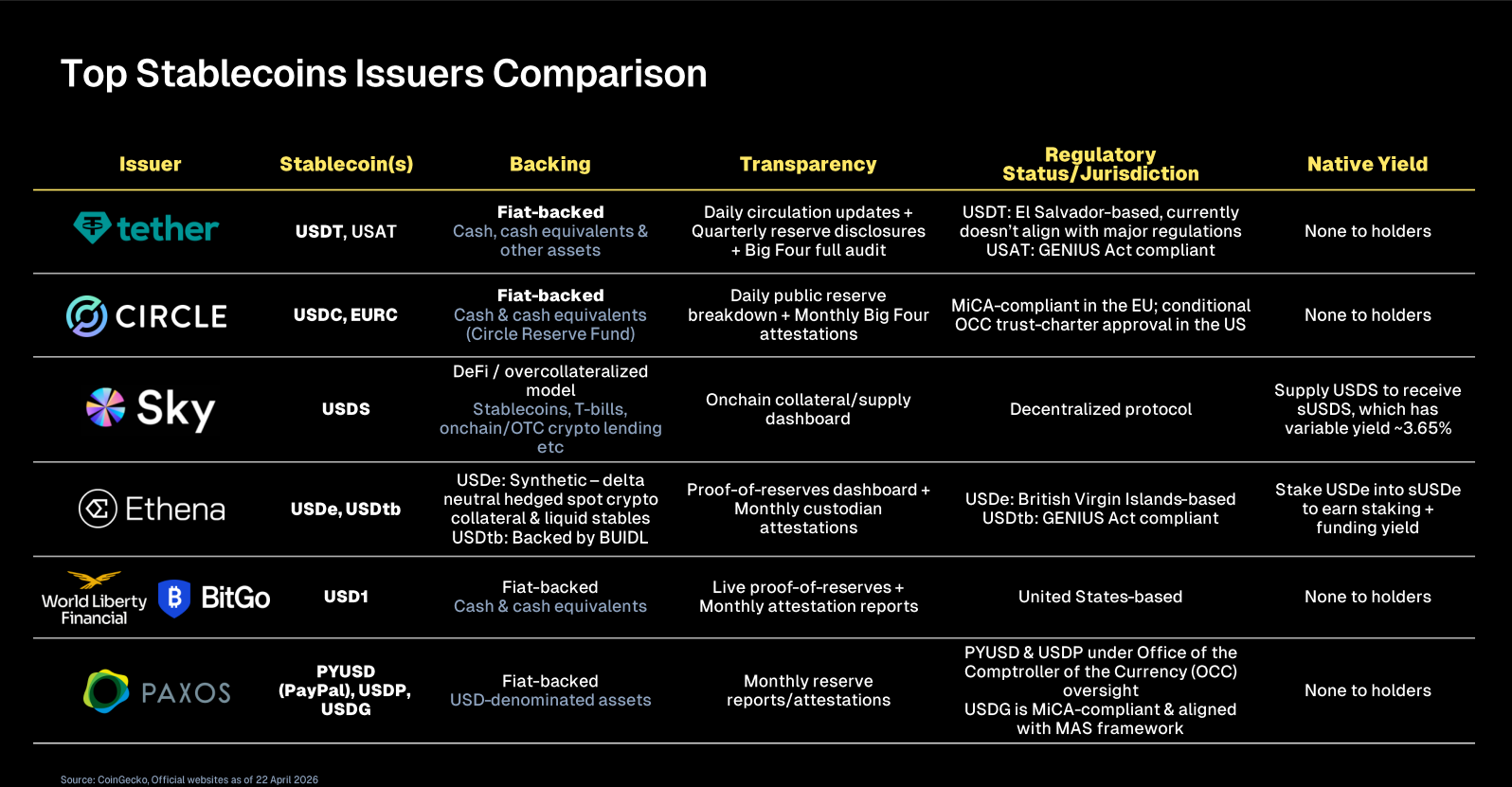
Source: CoinGecko RWA 2026 Report
Crypto might be undergoing a similar reset right now. The question that the market is posing now is more challenging, i.e., does this matter when speculation wanes? Although such a change may be unpleasant, it might also mark the start of a better, more developed stage for the sector.
What Happened to Crypto's Biggest Narratives?
If optimism was the foundation of the last crypto cycle, then stories were also the foundation. Every year, a fresh story seemed to emerge that may be the game-changing use of blockchain. Ownership would be redefined by NFTs. The metaverse would take the place of the internet of today. Gaming would become a source of revenue thanks to GameFi. DAOs would transform governance. SocialFi would allow artists to manage their viewers.
Investment in each story totalled billions of dollars.
The level of long-term adoption was comparatively low.
NFTs Proved That Ownership Alone Was Not Enough
Crypto was captivated by NFTs more than anything else. They made it possible for creators, collectors, brands, and game companies to develop in novel ways and guaranteed genuine ownership of digital goods. With NFT collections selling for millions of dollars and big brands racing to release their own digital collectables, the market appeared to be unstoppable for a while.
However, the figures demonstrated how quickly that enthusiasm subsided. Global NFT trading volume decreased from $16.8 billion in 2023 to $13.7 billion in 2024, according to data cited by The Block. NFT sales as a whole decreased from 60.6 million to 49.8 million throughout this period. One thing is evident from those numbers; the speculative drive driving the market vanished, but the market itself did not.
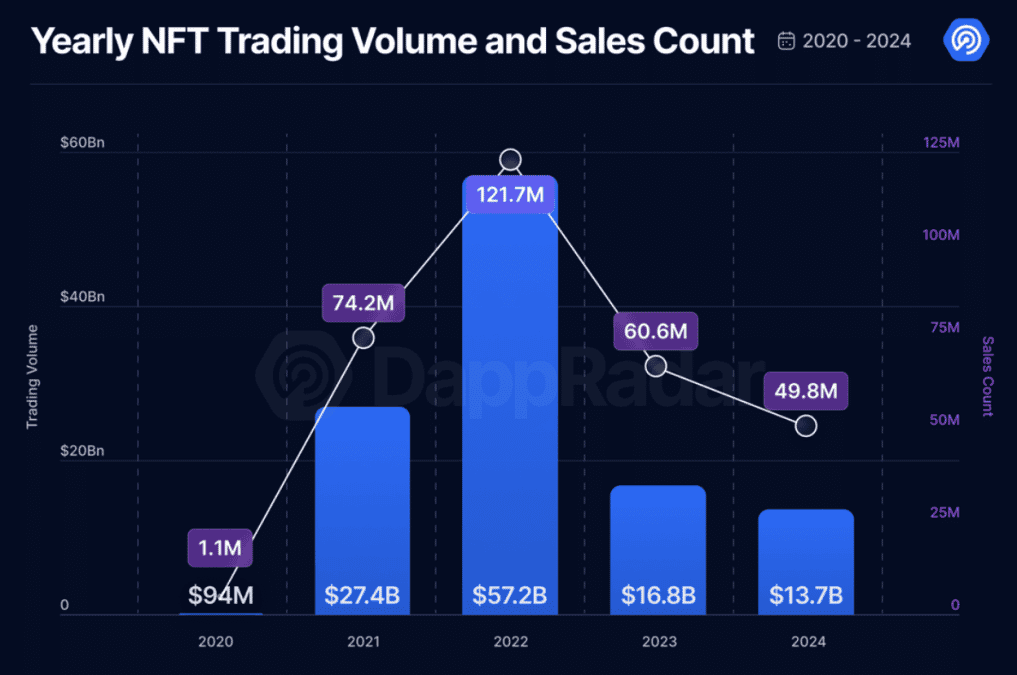
A far more limited and useful set of applications continues to exist. NFTs are still useful in industries where ownership is genuinely useful, such as gaming, ticketing, memberships, loyalty programs, and identity verification. The lesson is straightforward, i.e., hype can propel a market's growth, but genuine utility is what keeps it going.
The Metaverse Solved Technology Before Solving Consumer Demand
The metaverse was arguably Web3's most ambitious concept. It envisioned enduring virtual worlds where individuals might shop, work, interact with others, go to events, and own virtual property. Convinced that immersive online environments might ultimately become as widespread as today's social media platforms, technology businesses and cryptocurrency projects invested billions of dollars in that future.
During the bull market, virtual land, avatar economies, and digital storefronts attracted a lot of attention, but this attention seldom resulted in long-term engagement. The majority of users just did not find these surroundings useful enough to incorporate them into their everyday routines. Because consumer demand expanded significantly more slowly than investment projections, rather than because the technology failed, the story eventually lost steam.
Although consumer adoption has progressed more slowly than initially expected, market projections indicate that investment in the metaverse continues to grow. The sector was valued at USD 139.1 billion in 2025 and is forecast to expand to USD 3.73 trillion by 2033, growing at a 53.1% CAGR between 2026 and 2033. North America remained the leading regional market in 2025, accounting for 42% of total revenue, highlighting the region's strong role in driving metaverse development.
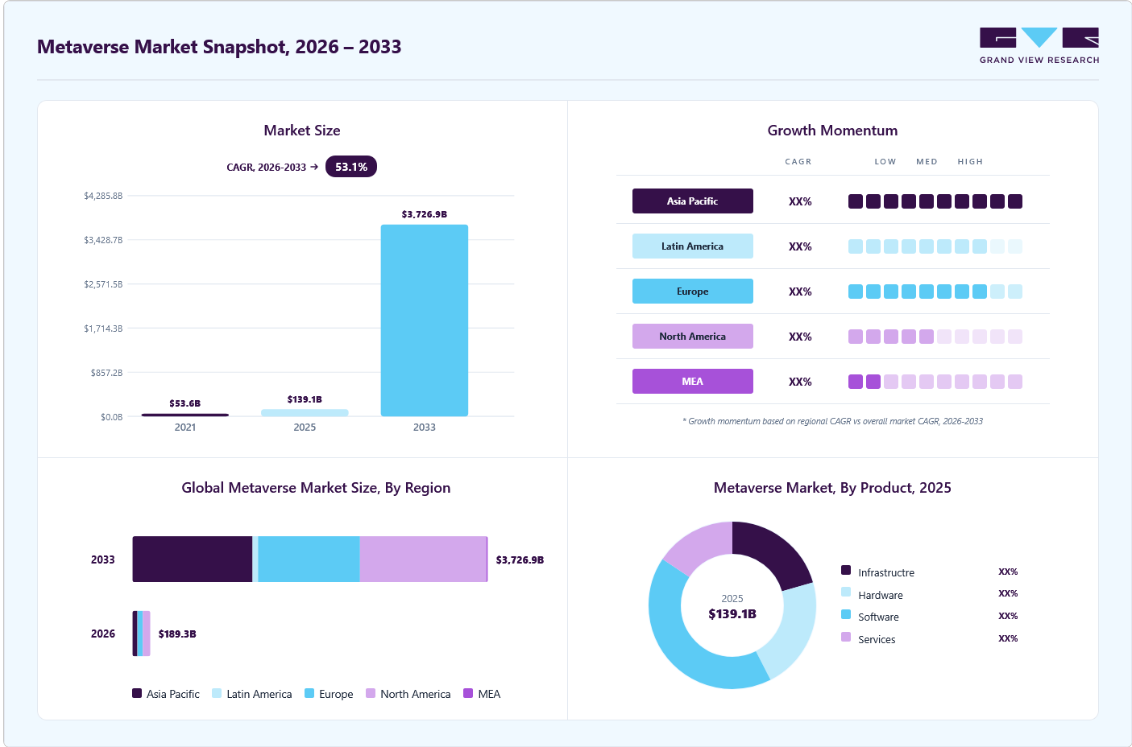
Source: Metaverse
GameFi Mistook Financial Incentives for Product-Market Fit
By merging games with financial incentives, GameFi became one of Web3's fastest-growing stories. The concept was simple, i.e., players could earn tokens and acquire in-game assets in place of spending money on games, establishing a model where fun and revenue coexisted. Millions of people were drawn to the idea, blockchain games grew quickly, and the idea that play-to-earn gaming was the way of the future was strengthened by the skyrocketing token prices. But during the market decline, the model revealed a basic flaw.
The economies of many GameFi ecosystems were challenging to maintain since they depended on an ongoing stream of new players to support token values. Player engagement dropped drastically when rewards decreased, indicating that a large portion of the demand had been driven by financial incentives rather than gameplay. The event brought home a crucial lesson, i.e., blockchain technology can improve gaming, but long-term success depends on making games that players actually like rather than merely ones that pay them to play for a short while.
SocialFi & DAOs Offered Better Ideas Than Products
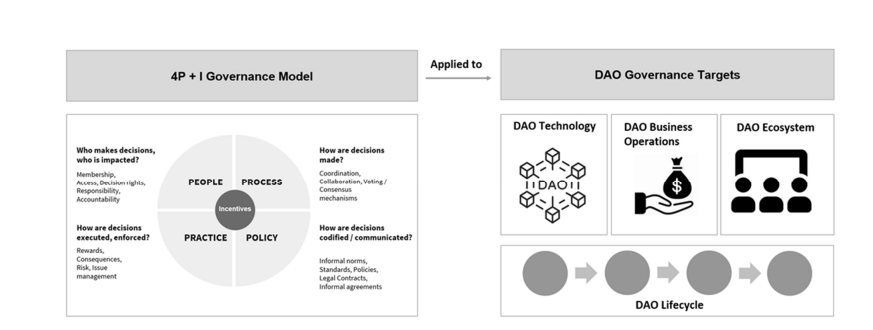
One of Web3's most intriguing concepts, that users should own and control the platforms they assist in creating, gave rise to SocialFi and decentralised autonomous organisations (DAOs). While DAOs intended to replace traditional management structures with community-driven governance, SocialFi sought to lessen artists' reliance on centralised social networks.
Both sectors found it difficult to move beyond crypto-native groups despite their high goals.
Rather than being a technological problem, the fundamental problem was behavioural. Most users value simplicity over participation. They want technologies that perform seamlessly instead of platforms requiring token-based governance, voting mechanisms, or continual community interaction. DAOs also faced well-known organisational issues, such as sluggish governance procedures, concentrated decision-making authority, and low voter turnout. In a similar vein, SocialFi platforms found that users were rarely convinced to abandon networks where their current communities already existed by ownership alone.
Source: DAO
When combined, these stories show a recurring theme. Blockchain technology often delivered what it promised technically, but many products failed to create habits strong enough to survive after speculative excitement faded.
Funding Was Huge. Where Are the Users?
The most obvious takeaway from the last market cycle is probably that adoption and capital are not synonymous.
Web3 emerged as one of the world's most heavily supported technological industries between 2020 and 2022. NFT markets, blockchain game studios, metaverse companies, decentralised social platforms, and supporting infrastructure have all received billions of dollars from venture capital firms. With every new story, funding rounds got bigger, confirming the notion that widespread adoption was unavoidable.
In retrospect, such a presumption turned out to be too optimistic.
Expectations, not facts, are often the basis for investment. Even if the current user base is still quite small, investors believe that demand will grow in the future, which allows a firm to raise large sums of money. This dynamic was a common occurrence in cryptocurrency. Token incentives, airdrops, or speculative behaviour were often used by projects that received significant financing to draw users. Short-term development was outstanding with those tactics, but after financial benefits diminished, they frequently failed to maintain participation.
The industry is now measuring success differently as a result of this change. Investors are becoming more interested in regular customers, transaction activity, sustainable revenue, and technologies that continue to operate independently of market cycles rather than celebrating the size of fundraising rounds. This is, in many ways, a healthier developmental period. The first Web3 generation demonstrated that blockchain could draw interest; the subsequent generation must demonstrate that it can retain users if the initial enthusiasm wanes.
Therefore, the inevitable issue of why so many tales declined is no longer relevant. It is the aspects of the cryptocurrency market that kept expanding after speculation ceased to be the main topic of discussion.
What Actually Survived?
It appeared that there was no more significant use for cryptocurrency due to the end of NFTs, the metaverse, and GameFi. But a closer examination tells a different story. Products designed to address actual financial issues continued to grow, while consumer-facing tales found it difficult to sustain their momentum. There's a noticeable difference. Regardless of whether the market is bullish or bearish, individuals continue to use the industries that have survived, which may or may not be the most interesting.
These products enhance already-existing activities, like transferring money across borders, settling financial transactions, or managing real-world assets, rather than attempting to establish completely new digital economies. This is, in many respects, the most significant change in the development of cryptocurrency. The sector is gradually shifting its focus from promoting future ideas to developing financial infrastructure.
Stablecoins Succeeded Because They Solved an Existing Problem
Stablecoins are the best example of this change among cryptocurrency products. Stablecoins are intended to maintain a somewhat consistent price, which makes them appropriate for trading, payments, remittances, and treasury management, in contrast to volatile cryptocurrencies whose value fluctuates significantly daily.
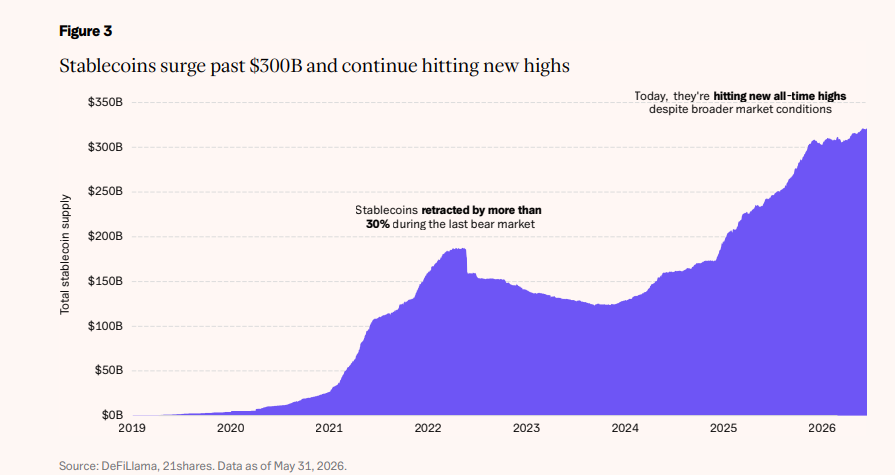
More significantly, even after the speculative industries started to wind down, their growth persisted.
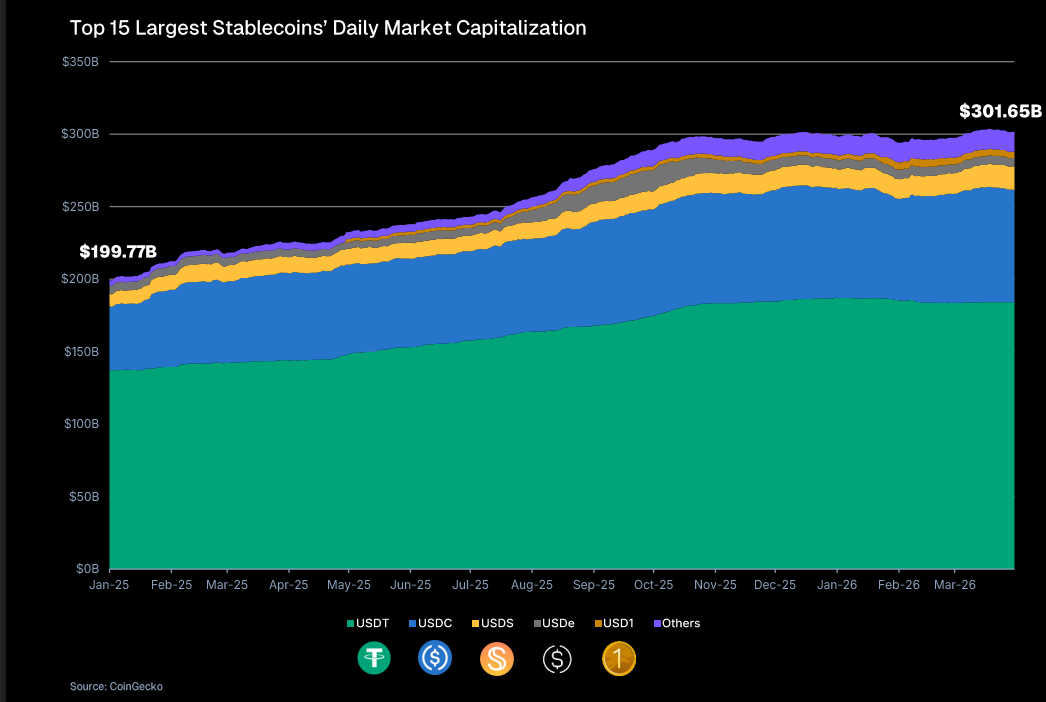
According to CoinGecko's 2026 Real-World Asset Report, the worldwide market capitalisation of stablecoins grew by more than 50% in just fifteen months, from $199.8 billion in January 2025 to over $301.6 billion by the end of March 2026.
Source: CoinGecko RWA 2026 Report
These figures are significant since they show regular usage as opposed to speculative zeal. Stablecoins are still used by businesses to expedite international payments, by merchants as a reliable unit of account, and by individuals to move money across borders without relying on conventional banking infrastructure. Stablecoins, in contrast to NFTs or play-to-earn games, don't need continuous market excitement to be beneficial. Their worth is derived from more effectively resolving an existing financial issue.
Source: 21shares
Tokenisation Is Growing Quietly Behind the Headlines
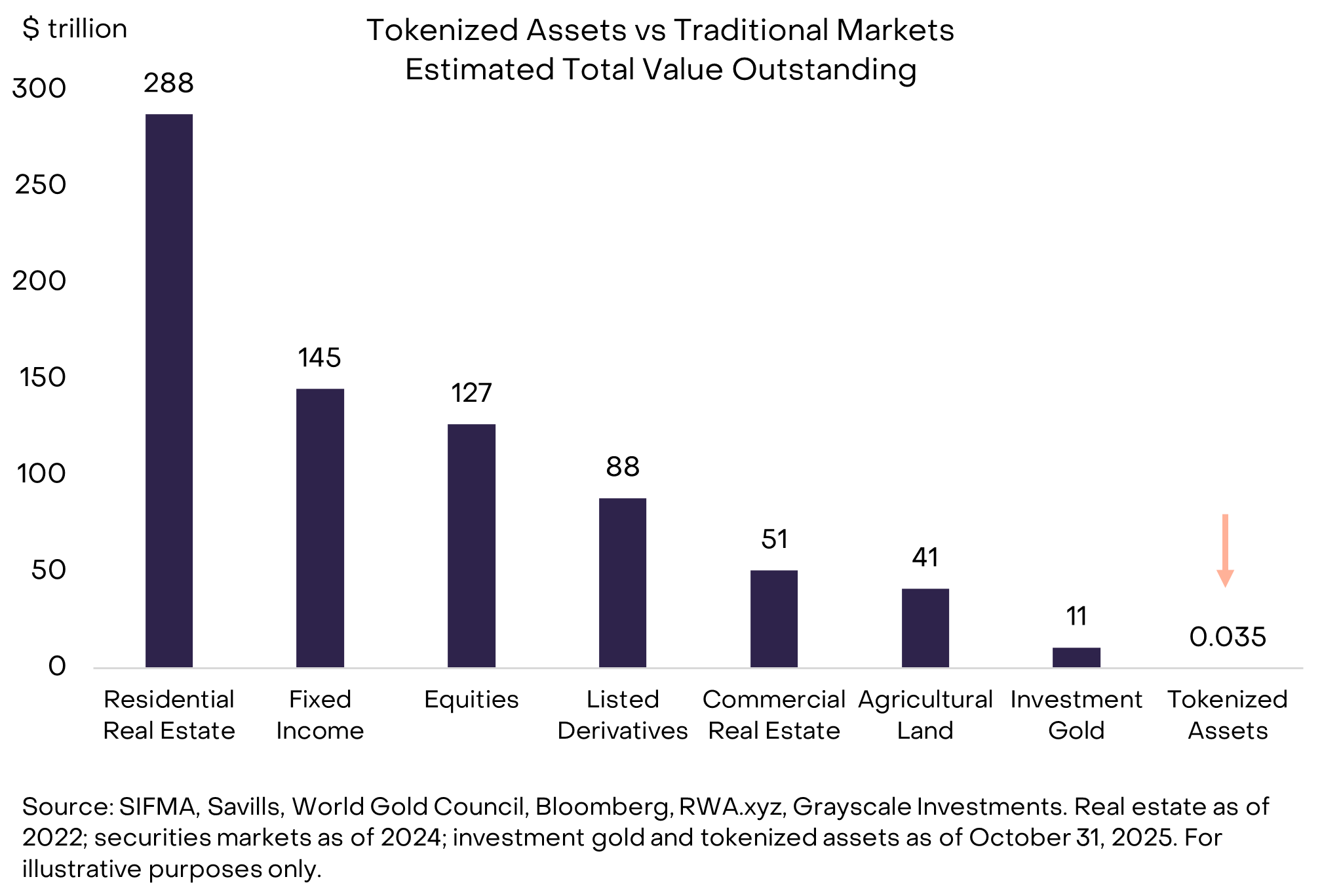
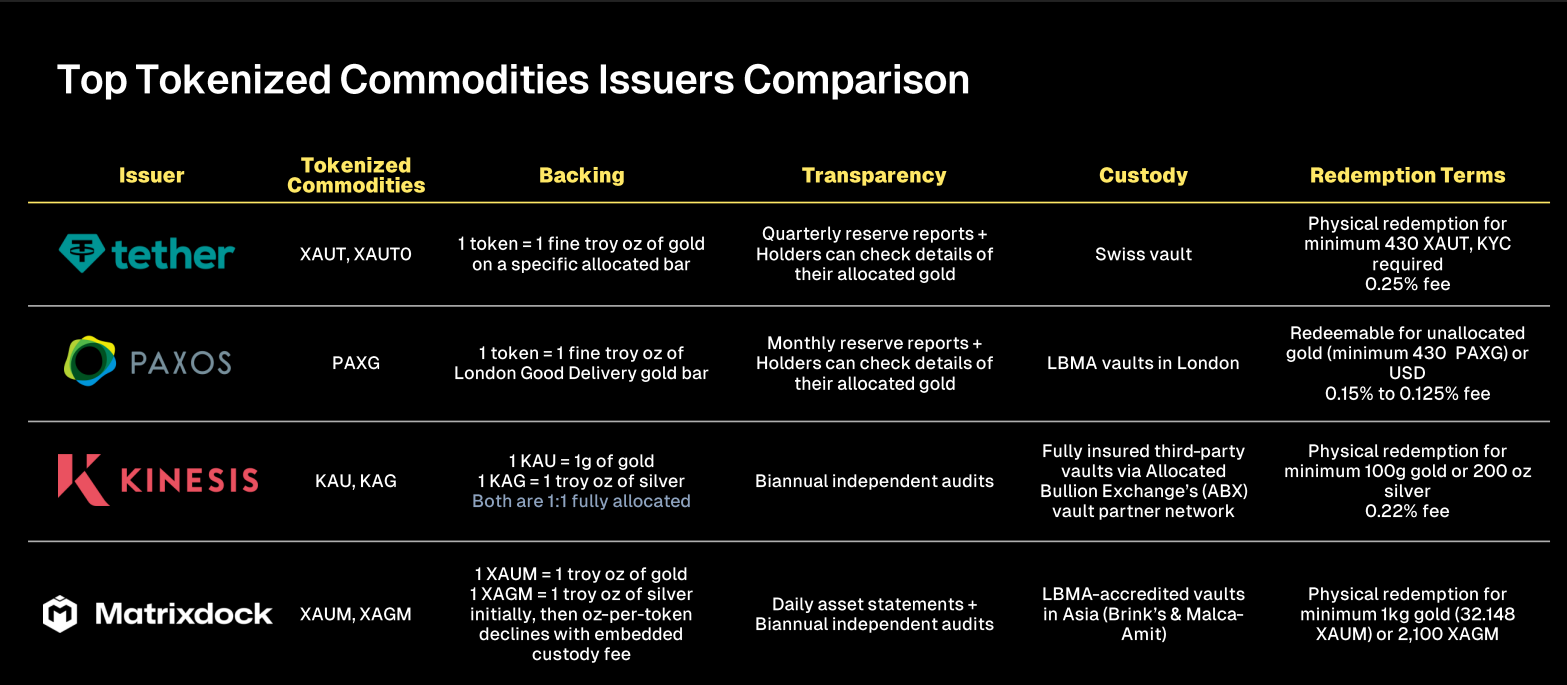
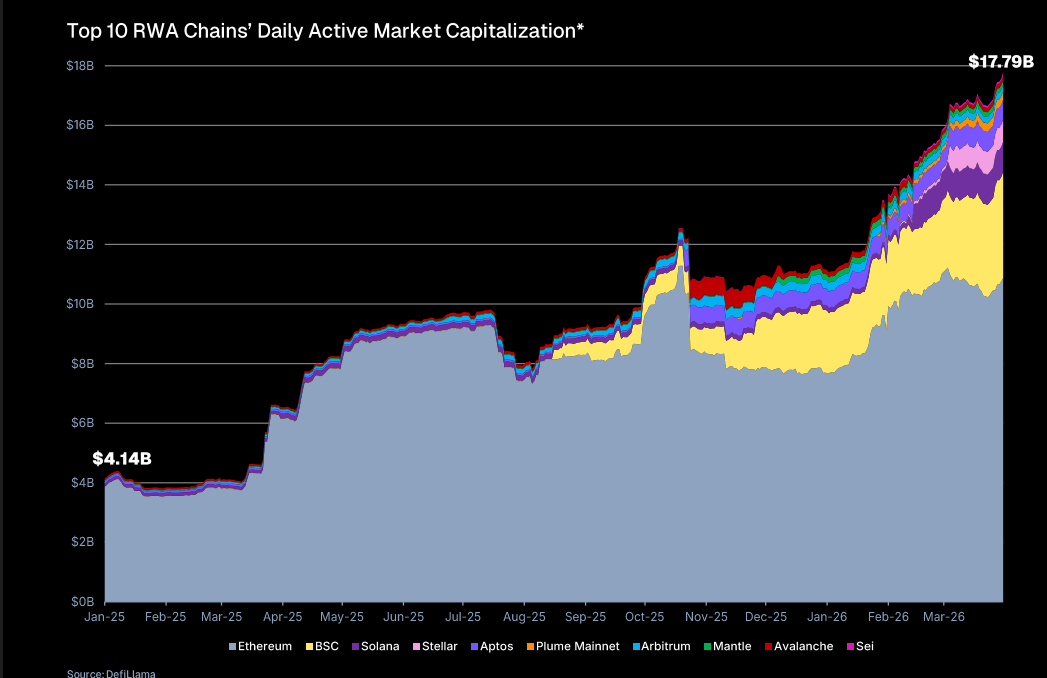
Tokenisation of real-world assets (RWAs) is another field that is gaining popularity. Tokenisation aims to enhance current financial markets by representing conventional assets on blockchain networks, in contrast to previous Web3 narratives that tried to create completely new digital economies.
Source: 2026 Digital Asset Outlook - Grayscale
The on-chain issuance and settlement of government bonds, treasury bills, private credit, investment funds, commodities, and even real estate is being investigated more and more. Financial institutions are becoming more interested in this movement since the potential advantages are operational rather than speculative, even though it has received far fewer headlines than NFTs or the metaverse.
Tokenized U.S. Treasuries have emerged as one of the fastest-growing segments within the real-world asset (RWA) market. The sector's market capitalization rose from $4 billion in early 2025 to $12.99 billion by 31 March 2026, representing a 225.5% increase. Notably, growth gained additional momentum after tokenized Treasuries surpassed the $10 billion market cap threshold on 11 February 2026, indicating accelerating adoption of blockchain-based government securities.
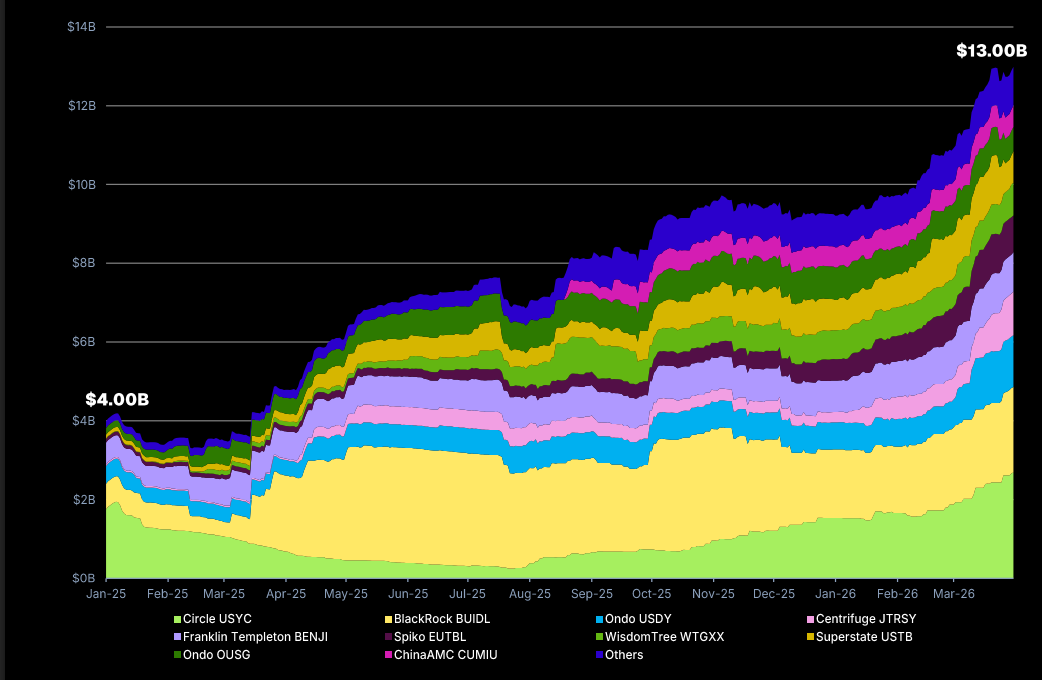
Source: CoinGecko RWA 2026 Report
The importance is seen not only in the size of the market but also in the adoption drivers. Tokenisation is being investigated more and more by banks, asset managers, regulators, and financial institutions in search of quicker settlement, increased transparency, and reduced operating costs, in contrast to earlier cryptocurrency cycles that were mostly driven by retail investors.
Prediction Markets Continue to Find a Purpose
One of the more robust uses of cryptocurrency is prediction markets. Users can trade contracts on these platforms depending on the likelihood of future occurrences, such as elections, sporting events, macroeconomic data, and policy choices.
They initially look like gambling sites. By combining collective expectations into market prices, they actually accomplish a wider goal. The projections that are produced frequently offer insightful information about how participants evaluate potential outcomes.
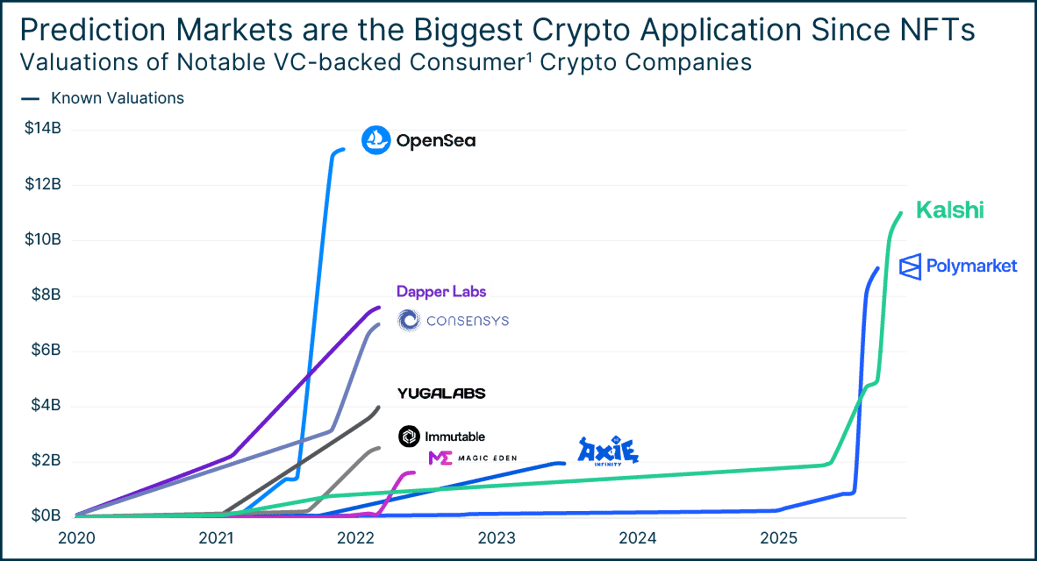
Source: Silicon Valley Bank
Growth in prediction markets has accelerated far faster than anticipated. With $57.5 billion in trading volume recorded by the end of May, the sector has already achieved more than half of its projected $100 billion annual volume. Trading activity is also more than 10 times higher than during the corresponding period last year, underscoring the increasing adoption of blockchain-based prediction platforms.
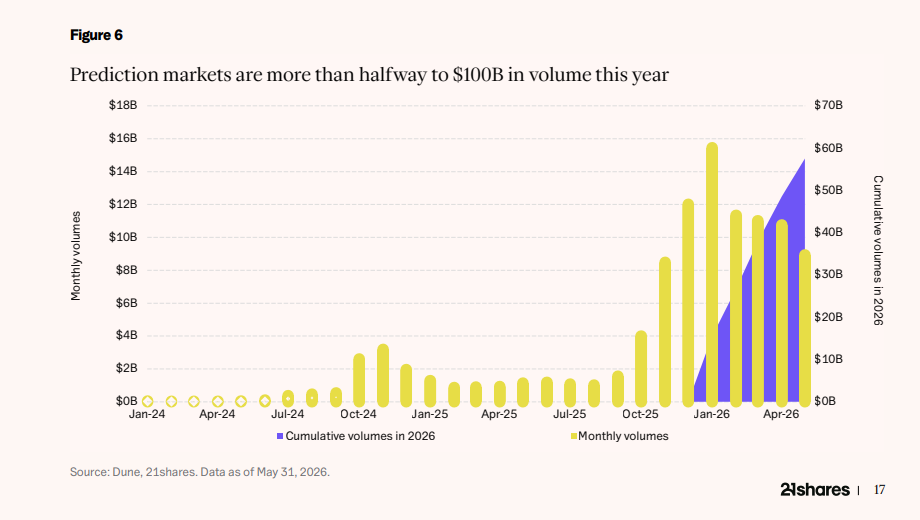
Source: 21shares
Are Gambling and Speculation Crypto's Only Product-Market Fit?
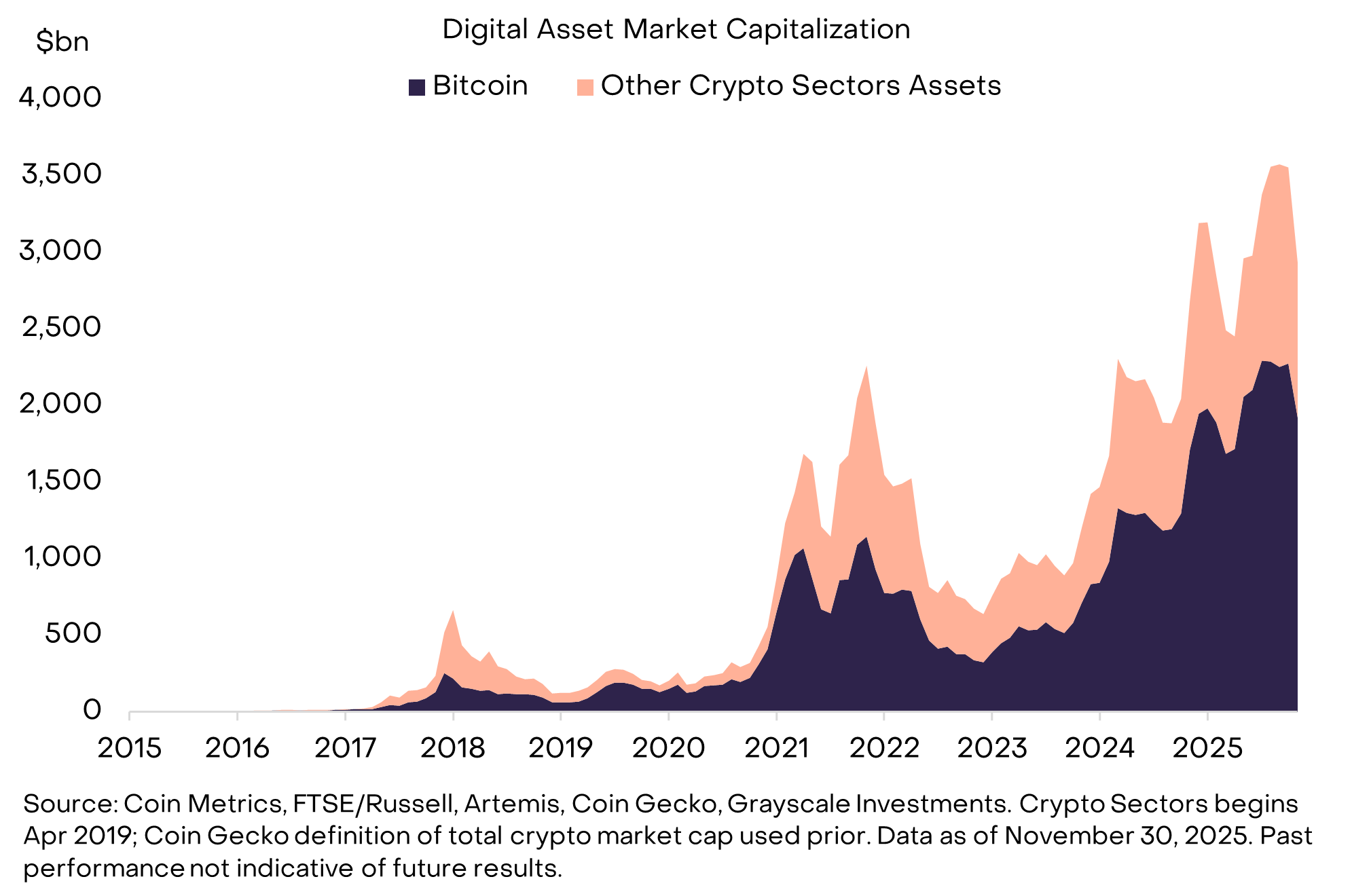
The fact that speculation is still the key use case for cryptocurrency is one of its biggest complaints. While trading still makes up a sizable portion of blockchain activity, memecoins and leveraged products continue to draw substantial liquidity while having little practical use. Speculative cycles have consistently attracted more users to cryptocurrency than the majority of technological advancements.
That does not, however, imply that the sole product-market fit in the sector is conjecture. Every financial market, including foreign exchange, commodities, and stocks, depends on players valuing future uncertainty. Whether cryptocurrency can provide value outside of trade is the true question.
Source: 2026 Digital Asset Outlook - Grayscale
Prediction markets continue to gain traction by pooling data rather than just promoting speculation, tokenised assets are drawing increasing institutional interest, and stablecoins have emerged as a crucial instrument for payments and cross-border transfers. Although these applications don't have the thrill of bull-market narratives, they do address real use cases. Millions of people may have been introduced to cryptocurrency through speculation, but long-term adoption will depend on goods that hold their value even after the excitement subsides.
Web3 Is Not Dead, but the Original Story May Be
The biggest mistake is to believe that technology is failing because the enthusiasm is fading. In actuality, a lot of the defining stories of Web3 were just ahead of their time. NFTs demonstrated that while digital ownership is feasible, not all collectables gain value. Although humans were not prepared to embrace immersive virtual worlds on a large scale, the metaverse showed what they may look like. GameFi demonstrated how digital resources may improve gameplay, but it also showed that monetary rewards are insufficient to maintain participation. In a similar vein, DAOs implemented a novel approach to governance but had difficulties with accountability, participation, and effective decision-making.
These concepts have not been lost, but rather become more useful. Simultaneously, the industry's attention has turned to applications that enhance current financial systems. Blockchain technology is progressively being incorporated into conventional finance, tokenised assets are drawing institutional attention, and stablecoins are emerging as a significant payment instrument. Compared to NFT booms or metaverse land sales, these innovations might not make as much news, but they nevertheless meet practical requirements and have grown even when speculative storylines have faded.
This evolution is similar to many transformative technologies. It wasn't because people discussed internet protocols that the internet became indispensable; rather, it was because the technology covertly powered everyday services. Instead of building a whole new financial ecosystem, blockchain might be heading in the same direction, becoming an unseen layer that enhances asset management, payments, and settlement.
In the end, the speculative narratives that dominated the last bull market are unlikely to define cryptocurrency's future. Products that continue to give value long after the enthusiasm has subsided will shape it. In this way, cryptocurrency is not dying; rather, it is only transitioning from a speculative period to one that is increasingly determined by utility.
If you find any issues in this article or notice missing information, please feel free to reach out at team@etherworld.co for clarifications or updates.
To promote your Web3 articles, events, and projects, you may reach out anytime via EtherWorld PR for submissions and collaboration.
Related Articles
- What the COLDCARD Exploit Means for Crypto?
- Ethereum Foundation Adds Security Expert pcaversaccio to Its Board
- Aave Shuts Low-Performing Markets to Reduce Risk
- Crypto Payments Are Mainstream, but Who's Actually Paying?
- Who's Building for Ethereum's AI Agents?
To follow blockchain news, track Ethereum protocol progress, and read our latest stories, subscribe to our weekly today.
Join the EtherWorld & Avarch Internship Program and build your career in blockchain, content, social media, video, podcast editing, or operations. Send your resume and brief introduction to contact@etherworld.co.
Disclaimer: The information contained in this website is for general informational purposes only. The content provided on this website, including articles, blog posts, opinions, & analysis related to blockchain technology & cryptocurrencies, is not intended as financial or investment advice. The website & its content should not be relied upon for making financial decisions. Read full disclaimer & privacy policy.
To stay updated on blockchain news, Ethereum protocol progress, and our latest stories, subscribe to our weekly digest and YouTube channel for ELI5 content.
To promote your Web3 articles, events, project updates, and Press Releases, reach out anytime via EtherWorld PR for submissions and collaboration. For other queries, email contact@etherworld.co.
If you’d like to support our work, share the content and consider donating at avarch.eth.
Join our community on Discord and follow us on Twitter, Facebook, LinkedIn & Instagram.

 ×
×

Author

Nidhi Kumari is a Web3 content writer at EtherWorld.co, tracking ecosystem developments, funding activity, and market trends shaping the crypto space.