Platåberget Testnet Brings Glamsterdam Closer to Mainnet
Platåberget opens Glamsterdam testing to the wider Ethereum ecosystem, bringing ePBS, BALs, gas repricing & other major changes closer to public testnets.
Ethereum has launched Platåberget, a new public testing network focused on the upcoming Glamsterdam upgrade, giving developers, validators, infrastructure providers and dApp teams an opportunity to test the upgrade before it reaches Ethereum's long-lived testnets and, eventually, mainnet.
Announced by the Ethereum Foundation on August 17, Platåberget represents a major shift in Glamsterdam's testing phase. Earlier development networks primarily focused on client interoperability and protocol implementation, while Platåberget is intended for much broader ecosystem participation.
Platåberget Opens Glamsterdam Testing to the Wider Ecosystem
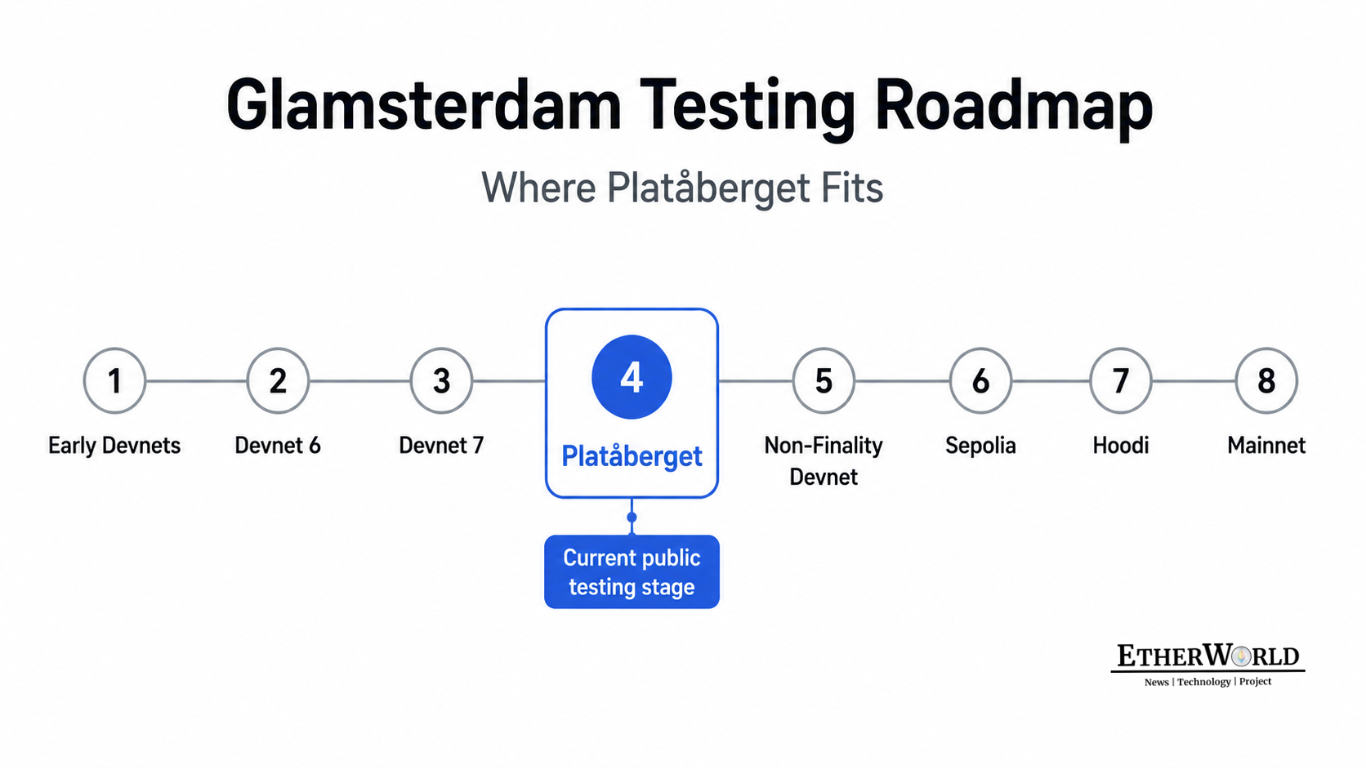
Platåberget is effectively the next stage in Glamsterdam's journey from protocol development toward production readiness. Ethereum upgrades typically move through several temporary development networks before being deployed on established testnets.
These devnets allow client teams to discover implementation disagreements, networking problems and unexpected protocol behaviour while changes are still relatively easy to modify. That process has been particularly important for Glamsterdam because the upgrade combines several substantial changes across Ethereum's execution and consensus layers.
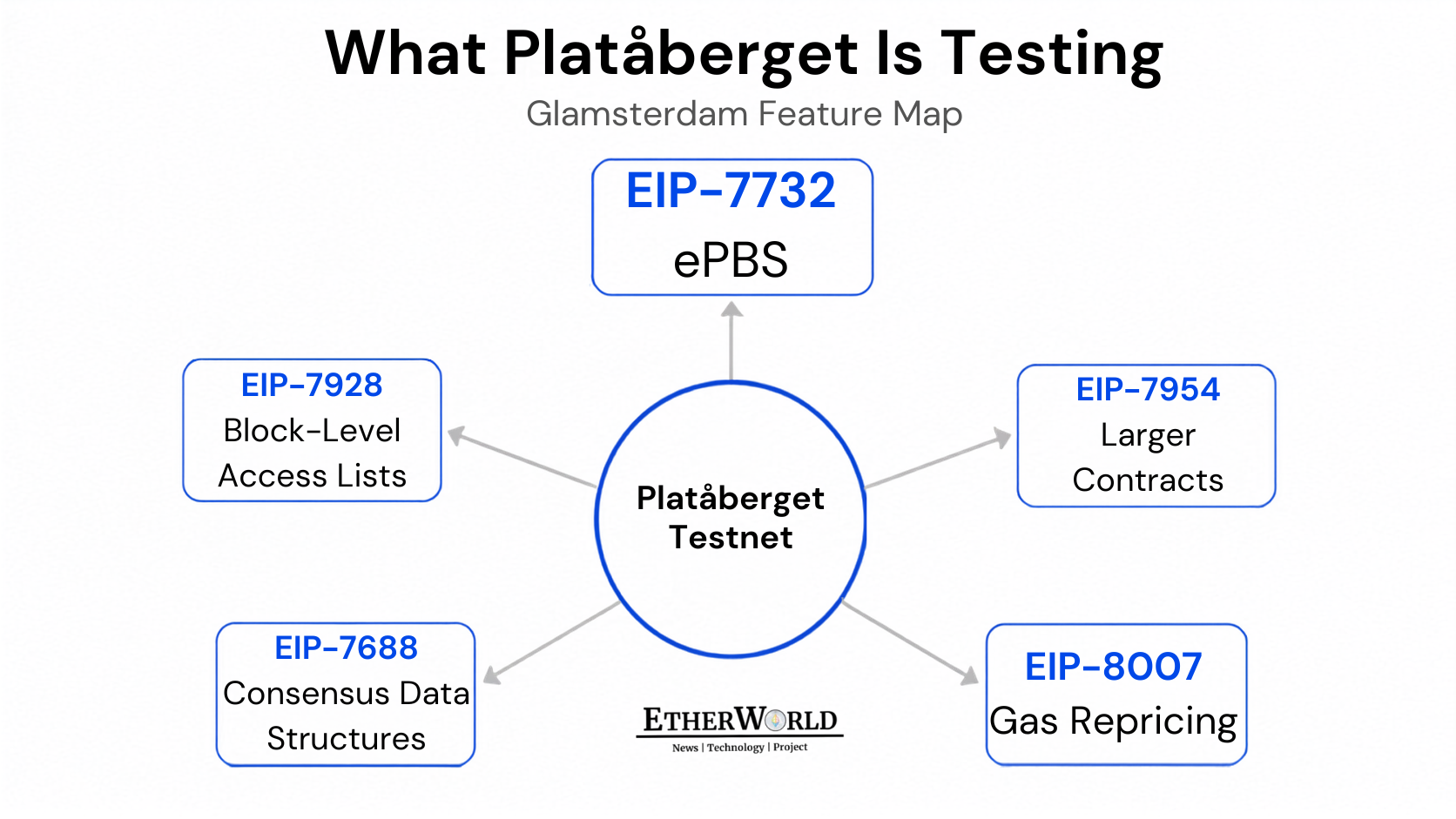
Earlier this year, developers progressively expanded the Glamsterdam feature set through multiple devnets. During ACDC #178, developers continued coordination around major features including EIP-7928, which introduces Block-Level Access Lists, and EIP-7732, which introduces Enshrined Proposer-Builder Separation (ePBS).
By July, the focus had shifted away from adding major new features and toward stabilization. EtherWorld's Upgrade Watch #3 reported that Devnet 7 was moving Glamsterdam closer to a more stable specification and broader testing.
EtherWorld's coverage of ACDE #243 also tracked Glamsterdam's transition toward broader and increasingly production-like testing. The broader participation matters because many potential problems may only emerge once real applications, wallets, validators and tooling begin interacting with the network. The complete set of Glamsterdam changes is being tracked through the upgrade's meta proposal, EIP-7773.
What Developers Need to Test Before Glamsterdam
One of the biggest areas being tested on Platåberget is EIP-7732, Enshrined Proposer-Builder Separation, or ePBS. ePBS changes how Ethereum coordinates block proposers and builders by bringing parts of the proposer-builder relationship directly into the protocol. It introduces a new builder flow and Payload Timeliness Committee checks, meaning infrastructure built around Ethereum's current block production and validation pipeline may need to adapt.
Developers have spent months refining these mechanisms. Earlier EtherWorld coverage explained how ePBS and Block Access Lists progressed together, while later testing focused increasingly on interoperability, payload timing and builder-related workflows. Platåberget gives infrastructure providers a more realistic environment in which to test those changes.
Another major Glamsterdam feature is EIP-7928, Block-Level Access Lists, or BALs. BALs record accounts and storage locations accessed during block execution along with their resulting state information. The proposal is intended to enable client optimizations including parallel disk reads, parallel transaction validation and more efficient state processing.
The BAL data is stored separately from the normal block body and can also be exchanged between execution-layer peers through EIP-8159, which introduces the eth/71 Block Access List Exchange protocol. EIP-7928 has already gone through several rounds of implementation work. EtherWorld previously covered its progression through Glamsterdam's Devnet testing and its integration alongside ePBS.
Another notable change is EIP-7954, which increases Ethereum's maximum deployed contract size from 24 KiB to 64 KiB and maximum initcode size from 48 KiB to 128 KiB. For developers, that provides more room for complex smart contracts while also changing assumptions made by deployment tooling and contract infrastructure.
Glamsterdam additionally includes EIP-7688, which introduces forward-compatible consensus data structures using ProgressiveContainer-based structures. Developers building software that directly processes or verifies consensus-layer state therefore have another category of compatibility changes to test.
For anyone trying to follow the growing set of proposals, EtherWorld has also published a dedicated guide on tracking the Glamsterdam upgrade through EIPsInsight, alongside an evolving overview covering everything currently known about the Glamsterdam upgrade.
Gas Repricing and the Push Toward Higher Block Capacity
The broader repricing effort is organized through EIP-8007, which acts as a directory for Glamsterdam proposals changing Ethereum's gas pricing model. The goal is to better align gas costs with the actual resources consumed by different EVM operations and reduce bottlenecks that limit Ethereum's ability to safely increase L1 throughput.
Developers are preparing Ethereum for substantially higher gas capacity, with the Glamsterdam roadmap targeting a path toward an approximately 200 million gas floor. Increasing block capacity is not as simple as changing the block gas limit.
If resource-intensive operations remain underpriced, blocks could theoretically remain valid according to Ethereum's gas rules while becoming disproportionately expensive for clients to execute. Gas repricing is therefore intended to reduce these bottlenecks before capacity increases further.
One of the most important proposals is EIP-8037, which introduces higher and separately metered costs for operations that create new Ethereum state. Under the proposal, creating accounts, deploying contract code and creating new storage slots can incur costs through a separate state-gas dimension.
This has an important consequence for Ethereum transactions. A basic ETH transfer to an account that already exists can still total 21,000 gas, but that cost is decomposed through EIP-2780 into separate transaction components. Sending ETH to an address that does not yet exist can additionally incur state gas because Ethereum must create a new account.
That means wallets or applications assuming every ETH transfer is universally covered by a fixed 21,000 gas allowance may need to update their transaction estimation logic. Another proposal, EIP-8038, increases the cost of several state-access operations to better reflect the growing cost of accessing Ethereum's state.
The gas repricing package also includes proposals such as EIP-7976, which increases the calldata floor cost, and EIP-7981, which introduces additional pricing for transaction access-list data.
The issue became important enough to influence Glamsterdam's testing timeline. During ACDE #242, developers were still working through gas repricing and the remaining changes required before broader testing.
By ACDE #243, Glamsterdam was moving closer to the point where the larger ecosystem could begin testing the combined feature set. This continues work that has been progressing for months. EtherWorld previously tracked repricing alongside Devnet 6 and EIP implementation work as well as discussions during ACDE #240.
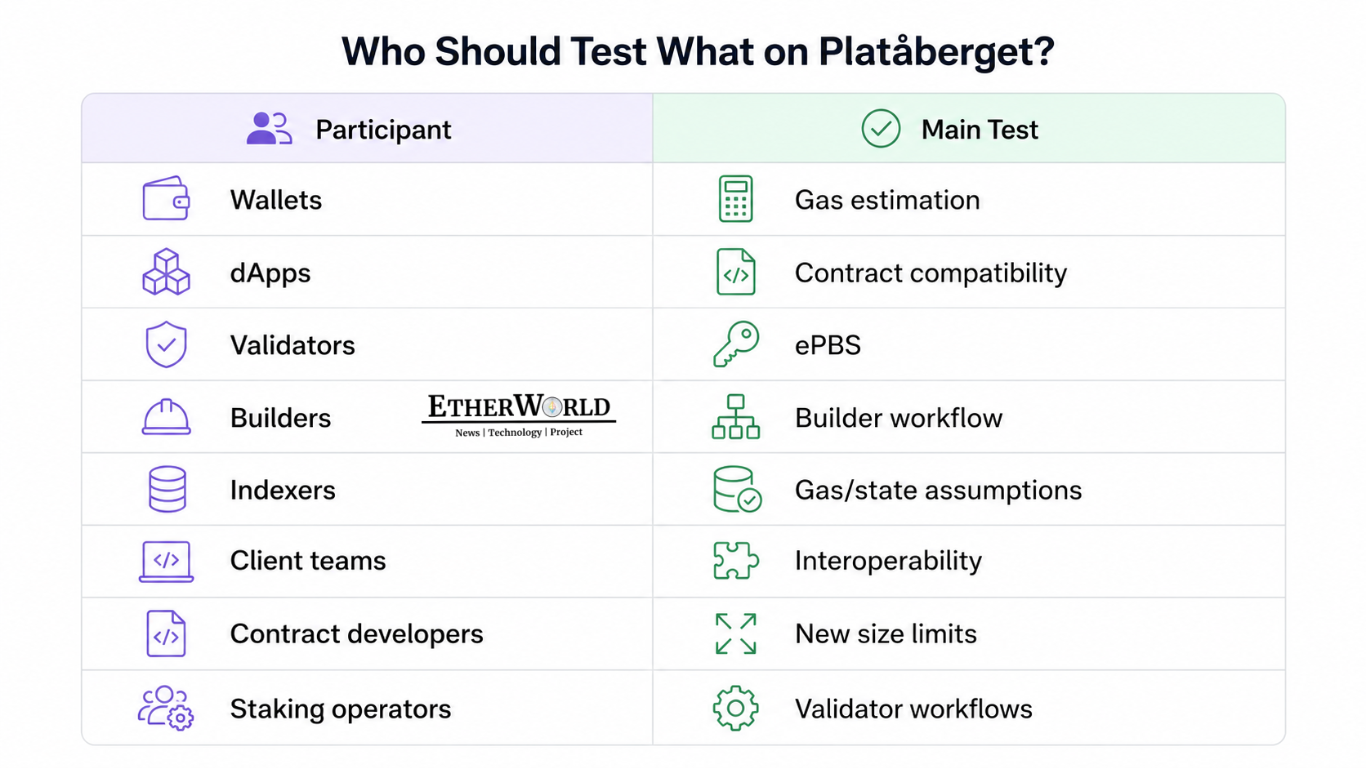
For application developers, this may ultimately be one of the most important aspects of Platåberget. The Ethereum Foundation specifically warned that wallets, indexers, gas estimators or other tooling that relies on a hardcoded maximum gas limit could break under Glamsterdam and should be tested before mainnet deployment.
What Comes After Platåberget?
Platåberget does not mean Glamsterdam is ready for Ethereum mainnet. Instead, it is designed to expose the upgrade to a broader group of users before developers move toward Ethereum's established testnets.
The Glamsterdam fork on Platåberget is scheduled for August 20, 2026, giving users time to prepare validators and infrastructure before activation. The Ethereum Foundation is encouraging developers to deploy contracts, run nodes, operate validators and test applications against the network. Validators can join through public deposits rather than relying entirely on a pre-allocated validator set.
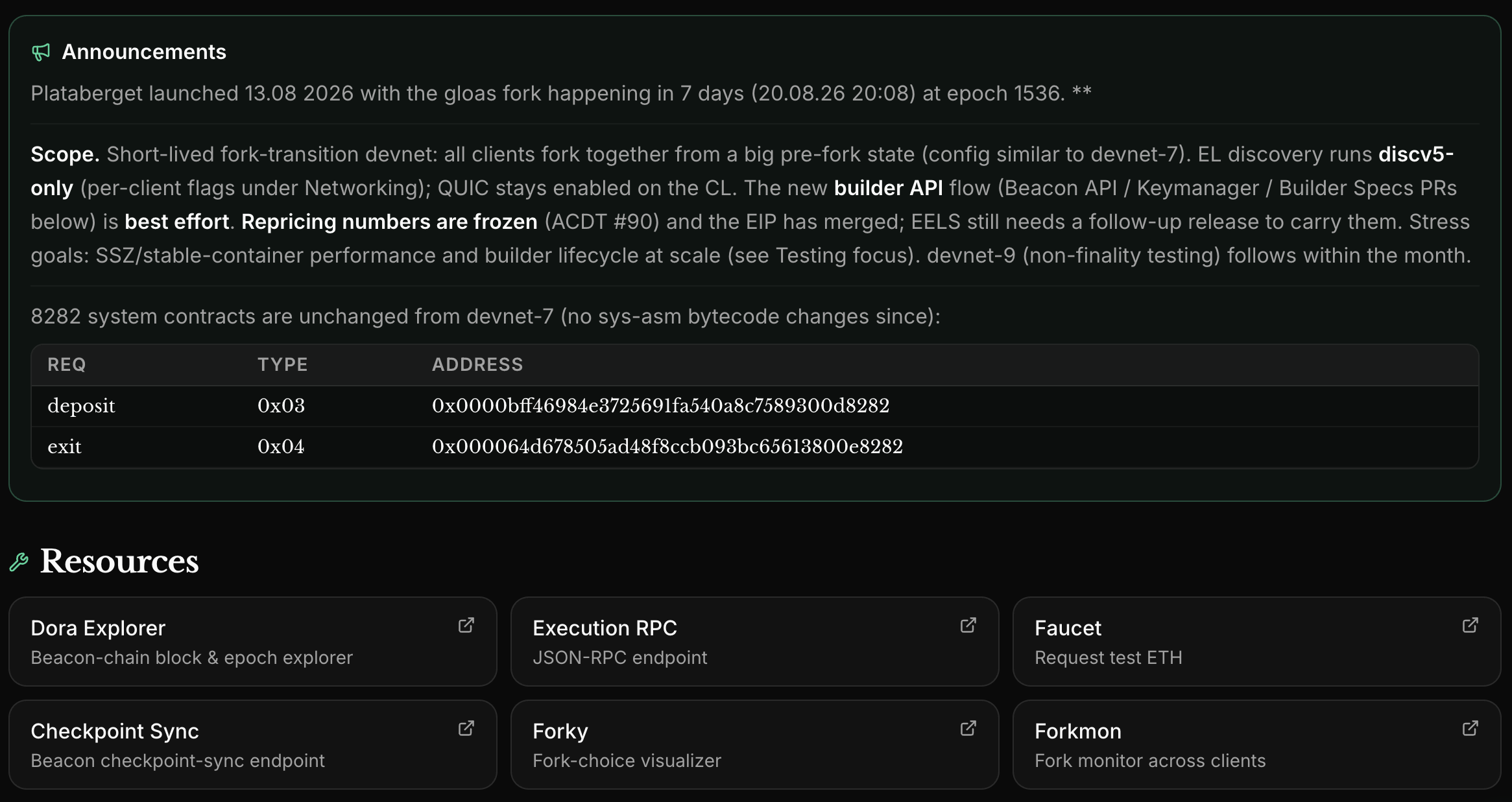
Follow more about Plataberget here.
That is particularly important for EIP-7732, since ePBS introduces significant changes for solo stakers, DVT projects, builder infrastructure and large staking operators. Testing is equally important on the execution side because
Ethereum's upgrade process has deliberately moved toward progressively more realistic environments. As EtherWorld noted while covering Glamsterdam Devnet 7, the development phase had already started shifting from structural experimentation toward interoperability and production-like testing.
The next major step is expected to involve a non-finality devnet, which the Ethereum Foundation says should follow after feedback from Platåberget is incorporated into client implementations and specifications. That environment will focus on pathological consensus scenarios where the network struggles or fails to finalize normally.
The more compatibility issues found now, the fewer surprises Ethereum developers should face when the upgrade eventually reaches mainnet. The complete Glamsterdam proposal set can be followed through EIP-7773, while network specifications, client information and participation details are available through the Ethereum Foundation's official Platåberget announcement.
To promote your Web3 articles, events, and projects, you may reach out anytime via EtherWorld PR for submissions and collaboration.
Related Articles
- Tracking the Glamsterdam Upgrade on EIPsInsight
- All You Need to Know About Ethereum Glamsterdam Upgrade
- Upgrade Watch #3: Glamsterdam Devnet 7 Nears Final Launch
- State of Upgrade – Glamsterdam Edition #1
- Ethereum Sets Sights on Glamsterdam Post-Fusaka Rollout
To follow blockchain news, track Ethereum protocol progress, and read our latest stories, subscribe to our weekly today.
Join the EtherWorld & Avarch Internship Program and build your career in blockchain, content, social media, video, podcast editing, or operations. Send your resume and brief introduction to contact@etherworld.co.
Disclaimer: The information contained in this website is for general informational purposes only. The content provided on this website, including articles, blog posts, opinions, & analysis related to blockchain technology & cryptocurrencies, is not intended as financial or investment advice. The website & its content should not be relied upon for making financial decisions. Read full disclaimer & privacy policy.
To stay updated on blockchain news, Ethereum protocol progress, and our latest stories, subscribe to our weekly digest and YouTube channel for ELI5 content.
To promote your Web3 articles, events, project updates, and Press Releases, reach out anytime via EtherWorld PR for submissions and collaboration. For other queries, email contact@etherworld.co.
If you’d like to support our work, share the content and consider donating at avarch.eth.
Join our community on Discord and follow us on Twitter, Facebook, LinkedIn & Instagram.

 ×
×

Author

Yash Kamal Chaturvedi is a Blockchain Content & Ops Specialist at Avarch LLC, writing on Ethereum & governance since 2021. Covers ACD/ACDE calls, EIPs, upgrades, staking, security & ecosystem trends.


