Brian Armstrong Pushes Accredited Investor Reform
Coinbase CEO Brian Armstrong wants a financial literacy test to replace wealth based accredited investor rules, while advancing stock buybacks and decentralized AI through crypto infrastructure.

Coinbase CEO Brian Armstrong is calling for changes to US accredited investor rules, arguing that ordinary investors should not need significant wealth to access private market opportunities. His proposal follows three major IPOs in 2026 that rewarded investors who entered before public listings, while retail participants had to wait until shares became publicly available.
Armstrong wants financial knowledge, rather than income or net worth, to determine who can invest in private companies. He is also connecting Coinbase's financial strategy with its broader ambitions in crypto and artificial intelligence.
Brian Armstrong Challenges Wealth Based Accredited Investor Rules
Armstrong believes the existing accredited investor framework gives wealthy individuals an advantage by allowing them to invest in private companies before those businesses reach the stock market.
Under the current US system, access to many private investment opportunities depends on meeting financial requirements. Investors who do not qualify often have to wait until a company completes its initial public offering to purchase shares.
Armstrong argues that this arrangement disadvantages people who understand financial markets but do not have the required income or net worth. He wants the qualification process to focus on financial knowledge instead of personal wealth.
His proposed financial literacy test would give individuals an alternative route to accredited investor status. Those who demonstrate sufficient understanding of investing could gain access to private market opportunities without having to meet the existing wealth based requirements.
I think it’s time to revisit the accredited investor laws in the US.
Companies are staying private longer, where only accredited investors (aka rich people!) can invest. Retail investors can only come in after IPO, when much of the upside has already been captured.
These rules were created with the best of intentions, to protect regular people from scams - a noble idea. Unfortunately, in practice they've often made it illegal to get richer, unless you're already rich. A regressive tax!
We have to judge policies based on their outcomes, not on their intentions.
These are two possible routes I see:
Replace the rule with something merit-based, like a financial literacy test. Pass it and you're accredited. Having a qualification based on competency rather than your bank balance or income seems far more fair.
Remove the rule entirely. Let consenting adults assess their own risk. Disclosure requirements stay and fraud enforcement stays to punish bad actors.
— Brian Armstrong (@brian_armstrong) June 16, 2026
2026 IPOs Highlight the Gap Between Private & Public Investors
Armstrong pointed to three of the largest IPOs in 2026, involving SPCX, ANT and SKHY, to explain why he believes the existing system needs an overhaul.
Investors who entered these businesses while they were privately held had an opportunity to benefit from their growth before public listings. Ordinary investors, however, could only purchase shares once the companies reached the IPO stage, potentially missing a substantial part of the earlier value creation.
His argument is that access to private investments should depend more on an individual's ability to understand financial risks than the size of their bank account. A literacy based qualification could allow knowledgeable individuals to participate earlier, rather than restricting these opportunities to people who already have considerable wealth.
Armstrong has also discussed the possibility of removing the accreditation requirement altogether, provided that disclosure obligations remain in place and authorities continue taking action against investment fraud.
The 3 largest IPOs in history (SPCX, ANT, SKHY) all happened in 2026. Great for the companies and the small number of investors who got in when they were private, not so great for average investors who can only buy at IPO prices.
It's time to update accredited investor laws and give the average person the opportunity to get exposure to private markets if they pass a financial literacy test, instead of using a financial means test.
— Brian Armstrong (@brian_armstrong) November 24, 2026
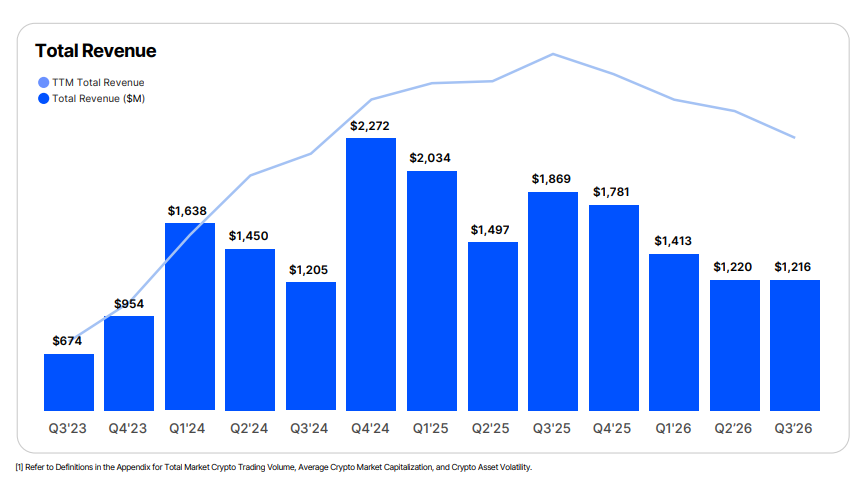
Coinbase Continues Its $4B Stock Buyback Programme
Alongside Armstrong's push for investment reform, Coinbase is continuing its share repurchase programme.
The company's board authorised a total of $4 billion in buybacks, covering its outstanding Class A common stock and long term debt. According to Coinbase's September 30, 2026 financial disclosures, approximately $2 billion had been used to repurchase 10.17 million shares, leaving another $2 billion available.
The remaining authorisation gives Coinbase room to continue purchasing its shares. The company has described its approach as opportunistic, with repurchases depending on market conditions and management decisions.
Its Q3 2026 earnings presentation also highlighted that more than $2 billion had been returned to shareholders through repurchases and that the programme had helped offset dilution from stock based compensation.
Armstrong Connects Crypto Infrastructure With Decentralised AI
Armstrong's investment reform proposal is part of a broader vision for Coinbase that also includes artificial intelligence. He believes AI agents could eventually become the primary interface through which people manage financial services.
His idea is to give individuals access to a personal banker through AI, helping them make better financial decisions. For this system to work, agents will need financial accounts, payment infrastructure and crypto based rails that allow them to transact with one another.
Armstrong also wants AI development to remain decentralised rather than being controlled by a small number of powerful technology companies. He has advocated for a network of specialised open weight models, each trained to perform particular tasks. These models could work together in teams, potentially delivering better results than relying on a single large model for every task.
Coinbase is working towards this vision through financial accounts, payment rails and marketplaces where AI agents can discover services, hire other agents and make payments. Armstrong sees market prices as an important coordination mechanism, allowing independent agents and specialised models to cooperate across the wider economy.
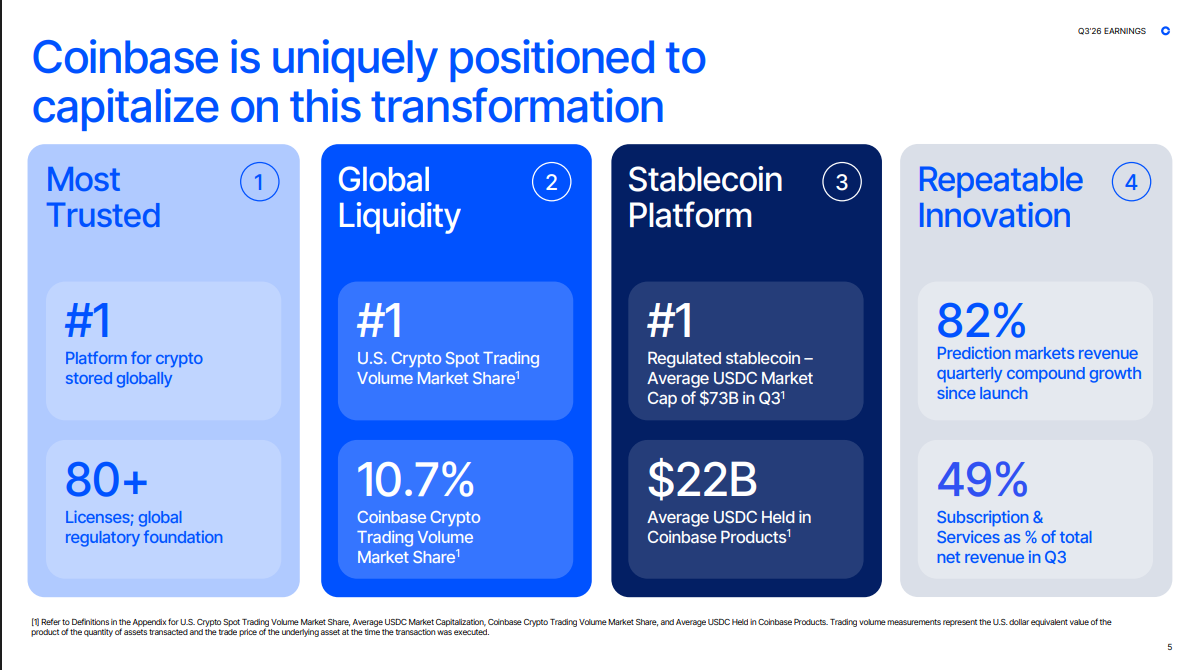
This approach connects Coinbase's existing crypto infrastructure with an emerging agent based financial system. Rather than treating AI as a separate technology, Armstrong sees it as another area where decentralised infrastructure can expand economic participation and individual choice.
If you find any issues in this article or notice missing information, please feel free to reach out at team@etherworld.co for clarifications or updates.
To promote your Web3 articles, events, and projects, you may reach out anytime via EtherWorld PR for submissions and collaboration.
Related Articles
- Coinbase’s New Perps Put the S&P 500 on 24/7 Trade
- Coinbase Wins $150K SEC Settlement Over Missing Gensler Texts
- India Is Crypto’s Largest Market, Says Coinbase CEO
- Coinbase AI Coding Hits 100% as Base Leadership Shifts
- Coinbase Chief Legal Officer Paul Grewal Steps Down After Six Years
To follow blockchain news, track Ethereum protocol progress, and read our latest stories, subscribe to our weekly today.
Join the EtherWorld & Avarch Internship Program and build your career in blockchain, content, social media, video, podcast editing, or operations. Send your resume and brief introduction to contact@etherworld.co.
Disclaimer: The information contained in this website is for general informational purposes only. The content provided on this website, including articles, blog posts, opinions, & analysis related to blockchain technology & cryptocurrencies, is not intended as financial or investment advice. The website & its content should not be relied upon for making financial decisions. Read full disclaimer & privacy policy.
To stay updated on blockchain news, Ethereum protocol progress, and our latest stories, subscribe to our weekly digest and YouTube channel for ELI5 content.
To promote your Web3 articles, events, project updates, and Press Releases, reach out anytime via EtherWorld PR for submissions and collaboration. For other queries, email contact@etherworld.co.
If you’d like to support our work, share the content and consider donating at avarch.eth.
Join our community on Discord and follow us on Twitter, Facebook, LinkedIn & Instagram.

 ×

Author

Nidhi Kumari is a Web3 content writer at EtherWorld.co, tracking ecosystem developments, funding activity, and market trends shaping the crypto space.