Ecosystem Spotlight: The Graph, Ethereum’s Data Layer
A deep dive into The Graph's architecture, GRT tokenomics, Ethereum integration, and its role as the decentralised data layer for Web3.
The Graph has solidified its position as Ethereum's leading decentralised data layer, offering crucial infrastructure that reliably and efficiently indexes and queries blockchain data throughout a growing multi-chain ecosystem. By providing structured, real-time access to this data, The Graph addresses a basic developer difficulty in the Ethereum network, where raw on-chain data is stored in intricate structures geared for security and consensus rather than simple retrieval.
The protocol provides high availability, censorship resistance, and geographic redundancy that centralised alternatives cannot match by processing blockchain events through its decentralised network of Indexers and serving them via Subgraphs and sophisticated Substreams technology. Building contemporary decentralised applications, analytics platforms, governance tools, NFT marketplaces, and even AI agents that need quick and reliable on-chain information has made this feature essential.
The Graph has developed into a multi-chain powerhouse that supports over 60 networks since its initial focus on Ethereum. In 2024, it completed its shift to full decentralisation. With active Subgraphs reaching a new all-time high of 15,539 in Q4, a 3.0% increase from the previous quarter, the protocol showed exceptional resilience and acceptance during 2025. Even as usage trends change toward Layer 2 solutions, the network has continuously processed billions of inquiries every quarter, demonstrating sustained demand.
Through staking, curation, and fee distribution procedures that balance financial interests with long-term security and performance, the native GRT token plays a crucial role in encouraging network involvement.
This comprehensive analysis explores the protocol’s origins, technical foundation, adoption metrics, deep integration within the Ethereum ecosystem, token economics and governance, and strategic future direction.
- The Founding Vision & Evolutionary History of The Graph
- Technical Architecture: Subgraphs, Substreams, & Core Components
- Key Growth Metrics & Widespread Adoption Trends
- The Graph’s Integral Role in the Ethereum Ecosystem & Multi-Chain Expansion
- GRT Tokenomics, Network Economics, & Governance Dynamics
- Challenges, Future Outlook, & Strategic Importance for Web3
The Founding Vision & Evolutionary History of The Graph
Yaniv Tal, Brandon Ramirez, and Jannis Pohlmann launched The Graph in 2018 in response to a significant gap in the Ethereum ecosystem: developers found it very challenging to access and use rich on-chain data in apps. Their goal was to develop a decentralised protocol that would index blockchain events and make them accessible via standardised, user-friendly GraphQL APIs, much like search engines index the conventional web.
With Graph Node software that could parse blocks and convert unstructured events into structured, queryable data, early development efforts focused on Ethereum. A new era in blockchain data accessibility began in Q1 2021 when the decentralised network started supporting its first Subgraphs.
We’re so excited to be announcing The Graph! 🗿✨ A decentralized query protocol for blockchains. The Graph lets you build dApps more easily on Ethereum and IPFS using GraphQL. Together we can build a new generation of the web free from monopolies. https://t.co/CRn36kuF2B
— The Graph (@graphprotocol) June 5, 2018
The protocol ran a hybrid paradigm for a number of years, combining the developing decentralised Indexer network with a subsidised hosted service run by Edge & Node. As the decentralised infrastructure developed, this strategy enabled quick developer adoption. The "Sunrise of Decentralised Data" effort, which was launched in October 2023 and completed by June 2024 through three meticulously planned phases known as Sunray, Sunbeam, and Sunrise, was a revolutionary milestone.

With the successful migration of each Subgraph to the separate Indexer network and the formal retirement of the hosted service, this upgrade achieved true decentralisation.
Simultaneously, The Graph finished moving its fundamental functions and indexing incentives to Arbitrum. One in June 2024, which led to the Layer 2 solution receiving 100% of the prizes for greatly enhanced transaction performance and cost effectiveness.
The Graph kept gaining traction throughout 2025. By the end of Q4, the number of active Subgraphs had reached a new record of 15,539 due to the strong level of developer engagement. The protocol maintained excellent interoperability with Ethereum's Layer 1 and Layer 2 ecosystems while expanding its cross-chain functionality and tooling.
The Graph's position as the fundamental querying infrastructure supporting the whole Web3 ecosystem has been solidified by its gradual evolution from a specialised Ethereum indexer to a fully decentralised, multi-chain data marketplace.
Technical Architecture: Subgraphs, Substreams, & Core Components
The Graph stands out in the blockchain infrastructure space due to its well-designed technological architecture, which offers flexibility, strong decentralisation, and excellent performance.
Subgraphs, which operate as unique, open APIs built by developers using a simple manifest file, form the core of the system. This manifest specifies which entities, events, and smart contracts need to be indexed. After being installed, Graph Node listens to the blockchain, gathers pertinent events, performs WebAssembly mappings to convert unstructured data into well-organised entities, and saves all of this information in a PostgreSQL database that is thereafter accessible through a robust and user-friendly GraphQL interface.
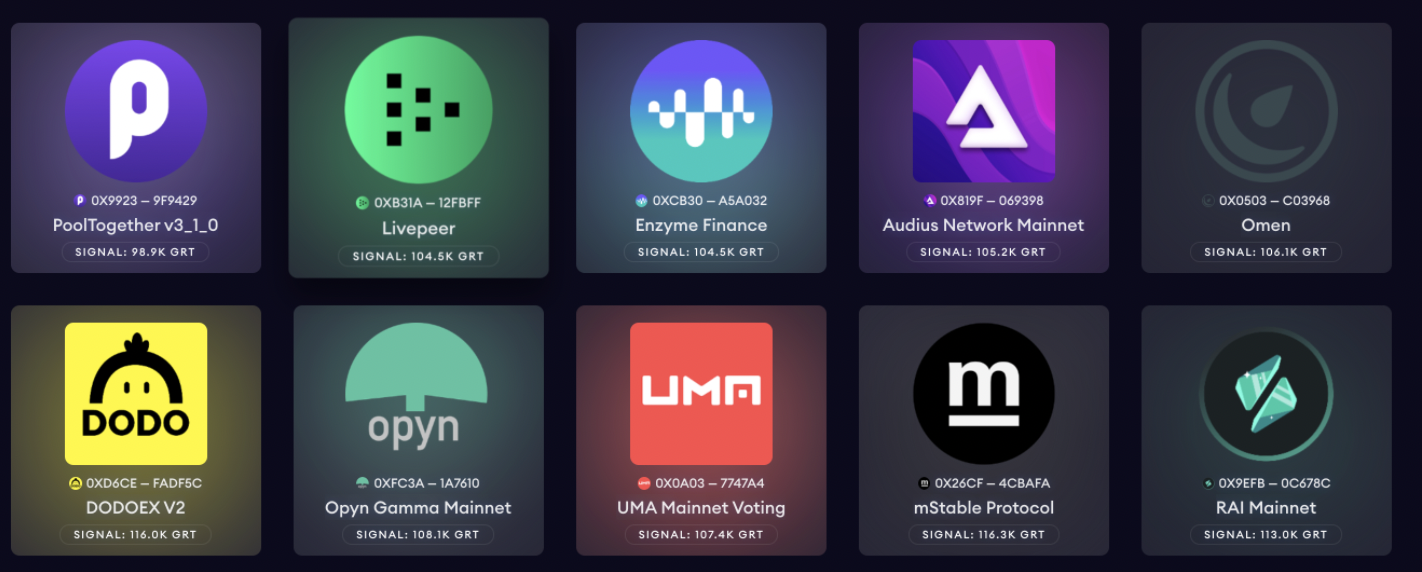
This procedure significantly speeds up development and enhances user experiences by enabling programs to access exactly the data they require without scanning the whole chain. Substreams, an advanced high-performance indexing mechanism intended for situations needing high throughput or real-time data streaming, complement Subgraphs.
Substreams is particularly useful for complex analytics, high-frequency trading tools, and AI-driven applications because it allows for the effective handling of large-scale data operations that go beyond traditional Subgraph capabilities. It is based on parallel processing principles and modular pipeline architecture. The network as a whole depends on a dynamic ecosystem of cooperative participants.
Curators employ GRT signals to identify high-quality Subgraphs and direct indexing priorities, while Indexers stake GRT and run Graph Nodes to offer query services.
By adding more stake Indexers, delegators strengthen the network and receive a portion of the profits. The same subgraph is usually served by multiple indexers, which provide redundancy and guarantee outstanding uptime and resistance to failures or censorship.
The workflow from concept to production is streamlined by critical developer tools that support the full stack. A complete environment for deploying Subgraphs, controlling API keys, and managing invoicing is provided by Subgraph Studio. Users can explore, test, and examine thousands of available Subgraphs in many categories using the Graph Explorer, which functions as a public discovery platform. Furthermore, the Graph CLI offers robust command-line features for code generation, local development, schema validation, and smooth deployment.
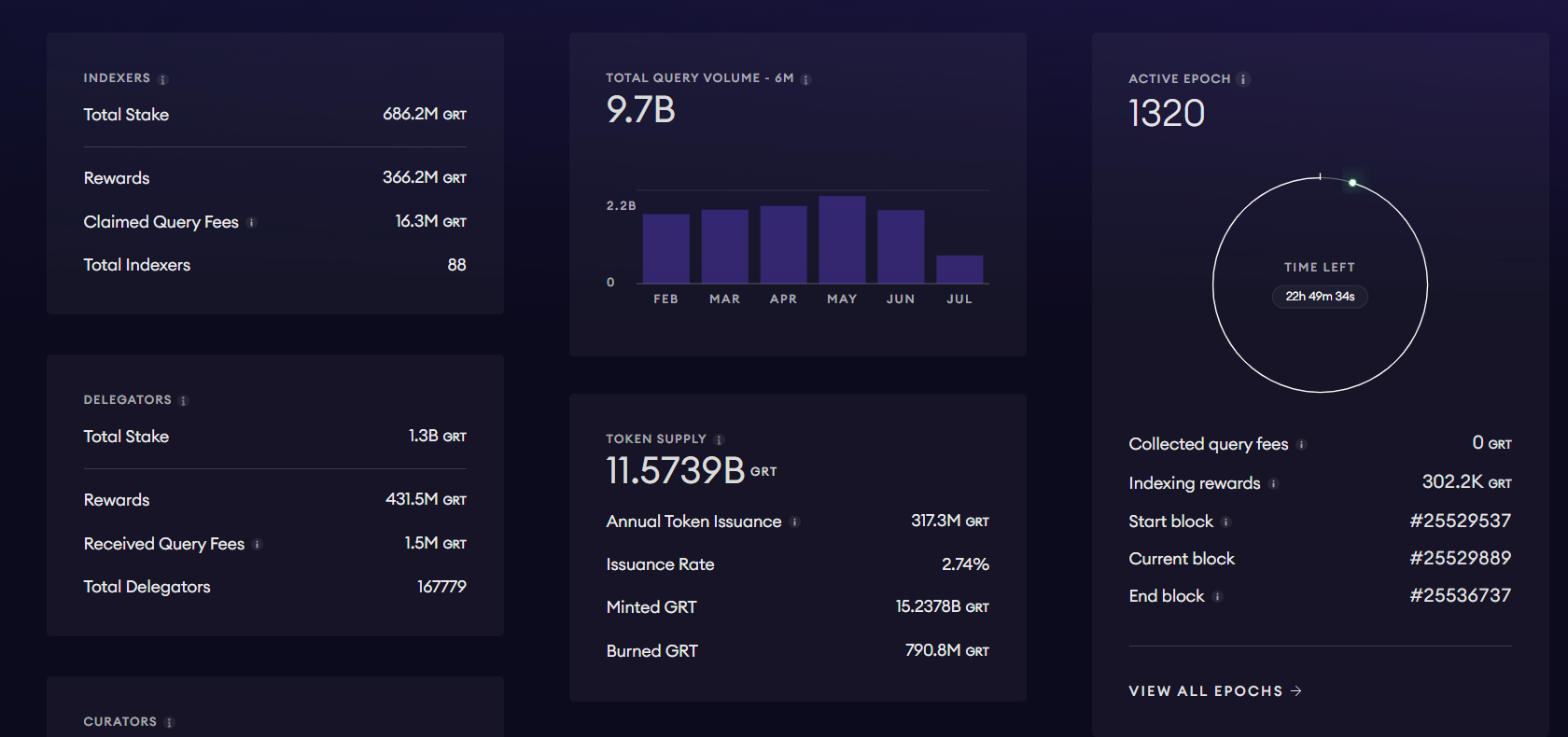
With specific improvements for Ethereum Layer 1 and Layer 2 solutions, as well as other high-performance chains, the design spans over 60 blockchain networks. With 88 active Indexers, 167,779 Delegators, and an active epoch count of 1,320, recent network data illustrates the size of this system and contributes to a robust and extremely functional data layer.
Key Growth Metrics & Widespread Adoption Trends
The Graph's remarkable growth numbers during 2025 demonstrate its growing significance within the Web3 ecosystem. The number of active subgraphs on the decentralised network increased by 3.0% from 15,087 in Q3 to a new all-time high of 15,539 in Q4 2025. This milestone demonstrated continued developer trust and involvement even in times of market uncertainty, continuing a record of steady expansion. New Subgraphs have been regularly released by developers in a variety of areas, adding to the extensive and varied collection of indexed data sources.
Demand for queries has continuously been high. The protocol's ability to handle significant amounts of on-chain activity is demonstrated by the most recent six-month total query volume of 9.7 billion. Base often records the largest volumes, such as 1.23 billion searches in Q4 2025, an 11.0% increase from the previous quarter. Layer 2 networks have been a major contributor to this rise. With a quarter-over-quarter growth of 31.0% during the same period, Arbitrum also showed notable momentum.
In Q4 2025, the Ethereum Mainnet processed 910.3 million inquiries, demonstrating its continued significant contribution. As activity moves toward more effective execution environments, these patterns show how The Graph successfully supports Ethereum's multi-layered architecture. The network is an essential foundation for practical Web3 products, with thousands of Subgraphs supporting important DeFi protocols, NFT initiatives, gaming applications, and decentralised governance tools.
The Graph’s Integral Role in the Ethereum Ecosystem & Multi-Chain Expansion
As the main decentralised layer for data indexing and querying, the Graph is an essential and growing part of the Ethereum ecosystem. It provides quick, dependable access to on-chain data throughout the Ethereum Mainnet and its Layer 2 scaling solutions, powering the user interfaces, analytics engines, and backend logic of innumerable decentralised apps.
This feature is particularly useful in DeFi platforms, NFT marketplaces, lending protocols, and governance systems that rely on historical or real-time data to provide smooth user experiences. The Graph allows developers to create cohesive apps that function seamlessly in Ethereum's fragmented yet composable ecosystem by indexing data across Arbitrum, Base, Polygon, Optimism, and other networks.
The multi-chain expansion of the protocol has been thorough and purposeful. The Graph enables apps to function beyond single-chain constraints while retaining deep compatibility with Ethereum's fundamental concepts due to support for over 60 blockchain networks and features like Chainlink CCIP integration for cross-chain GRT transfers.
The strong performance of Base and Arbitrum in 2025 demonstrated the transition toward Layer 2 dominance in query volumes, which immediately reflected broader developments in the Ethereum ecosystem toward increased scalability and reduced costs.
Ethereum is further strengthened by the network's decentralised architecture, which disperses data services worldwide and removes single points of failure. The Graph offers a consistent, dependable data basis that makes Ethereum's ongoing advancements in tokenised assets, stablecoins, institutional tools, and AI applications feasible and widely available.
GRT Tokenomics, Network Economics, & Governance Dynamics
GRT is the key utility token that powers The Graph network's security mechanism and economic engine. GRT is used by holders and participants to signal on valuable Subgraphs as Curators, stake as Indexers, and delegate stake to receive rewards while enhancing network security. With 88 Indexers with a total stake of 686.2 million GRT and cumulative prizes of 366.2 million GRT and 167,779 Delegators who have contributed 1.3 billion GRT in stake and received 431.5 million GRT in rewards, the most recent network dashboard gives a clear picture of the current situation.
Active engagement is further demonstrated by query fees that have been claimed and received; indexers have claimed 16.3 million GRT, while delegators have collected 1.5 million GRT. With an annual issue of 317.3 million GRT at a rate of 2.74%, the total token supply is 11.5739 billion GRT, demonstrating a balanced approach to inflation that sustains network incentives, while 790.8 million GRT have been burned over time.
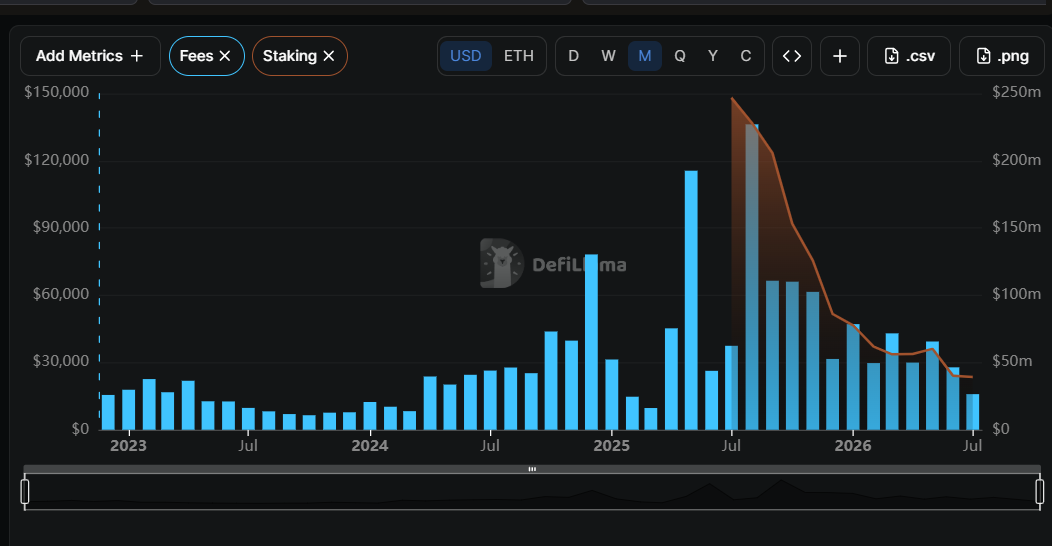
In 2025, network economics demonstrated remarkable resilience and flexibility. In Q4 alone, substreams revenue hit a record 6.08 million GRT, more than quadrupling from the previous quarter and indicating an increasing need for sophisticated data processing skills. Strong performance with notable peaks in the middle of 2025 was demonstrated by historical fee generation trends, which were then somewhat moderated while maintaining healthy activity levels. While query fees and reward distributions provide clear economic connections between usage, data quality, and participant earnings, staking has offered a strong security foundation.
This incentive structure makes sure that the value returns to the people who secure and curate the data layer as the network's query volume and Subgraph count increase. GRT holders and their delegates vote on important proposals, such as protocol updates, parameter changes like slashing percentages and allocation limitations, and more general strategic choices. Governance is essentially token-weighted. This system, which strikes a sensible mix between decentralised participation and effective execution, has been successful in directing significant milestones like the Arbitrum migration and ongoing technological improvements.
Challenges, Future Outlook, & Strategic Importance for Web3
During its 2025 level of maturity, the Graph has successfully tackled a number of issues, such as the difficulties of complete decentralisation and the transition of query patterns to Layer 2 networks. The record 15,539 active Subgraphs and a healthy 9.7 billion queries over the most recent six months demonstrate that foundational health indicators remained strong even though quarterly query rates saw some natural volatility in the latter part of the year. Maintaining appealing incentives during longer market cycles and continuing to optimise infrastructure for more demanding real-time and high-throughput applications are ongoing problems.
With a focus on deeper AI agent integration, performance enhancements, and increased developer tooling, The Graph is well-positioned for future innovation. The Graph is prepared to act as the main decentralised data layer that links unprocessed blockchain data to useful applications as Ethereum moves forward with its long-term roadmap, which is centred on scalability, data availability, and institutional adoption.
As it lowers development friction, permits strong cross-chain composability, and provides the dependable, censorship-resistant infrastructure required for the next wave of Web3 growth, its strategic significance cannot be emphasised. The Graph will continue to be a vital component of the Ethereum ecosystem for many years to come due to steady increases in Subgraph generation, query volume, and network staking.
If you find any issues in this article or notice missing information, please feel free to reach out at team@etherworld.co for clarifications or updates.
To promote your Web3 articles, events, and projects, you may reach out anytime via EtherWorld PR for submissions and collaboration.
Related Articles
- Trump Reports $100M Crypto, Vance Owns Bitcoin
- ENS DAO Voters Reject Security Council Renewal in Whale-Driven Vote
- Over 140 Firms Unite to Launch Open USD Stablecoin for Global Business Payments
- Base Mainnet Temporarily Halts Block Production After Invalid Block
- Binance System Outage Triggers Liquidation Debate
To follow blockchain news, track Ethereum protocol progress, and read our latest stories, subscribe to our weekly today.
Disclaimer: The information contained in this website is for general informational purposes only. The content provided on this website, including articles, blog posts, opinions, & analysis related to blockchain technology & cryptocurrencies, is not intended as financial or investment advice. The website & its content should not be relied upon for making financial decisions. Read full disclaimer & privacy policy.
To stay updated on blockchain news, Ethereum protocol progress, and our latest stories, subscribe to our weekly digest and YouTube channel for ELI5 content.
To promote your Web3 articles, events, project updates, and Press Releases, reach out anytime via EtherWorld PR for submissions and collaboration. For other queries, email contact@etherworld.co.
If you’d like to support our work, share the content and consider donating at avarch.eth.
Join our community on Discord and follow us on Twitter, Facebook, LinkedIn & Instagram.

 ×
×

Author

Nidhi Kumari is a Web3 content writer at EtherWorld.co, tracking ecosystem developments, funding activity, and market trends shaping the crypto space.