Government Blockchain Pilots Keep Failing. Here's Why.
Why do government blockchain pilots fail to scale? Explore Sweden, Sierra Leone and Venezuela’s experiments and the lessons for successful adoption.

For years, governments have been experimenting with blockchain for digital currencies, payments, elections, and land registration. Rarely is the question whether a blockchain is technically feasible. The more difficult question is whether it can withstand current institutions, regulations, procurement processes, legacy databases, and user behaviour in the actual world. When asked why promising government blockchain initiatives fail to become long-term infrastructure, Sweden, Sierra Leone, and Venezuela provide three very different responses.
Why Governments Keep Testing Blockchain?
Governments are drawn to blockchain because it promises a shared, unchangeable record amongst entities that might not have complete faith in one another. Governments have investigated blockchain for voting, supply chains, healthcare, payments, notarization, land registration, and identity, according to the World Bank.
However, exploration does not equate to acceptance. Digital infrastructure, institutional capacity, multidisciplinary skills, procurement, funding, and implementation assistance are identified by the OECD's Enabling Digital Innovation in Government as requirements for expanding the use of successful pilots.
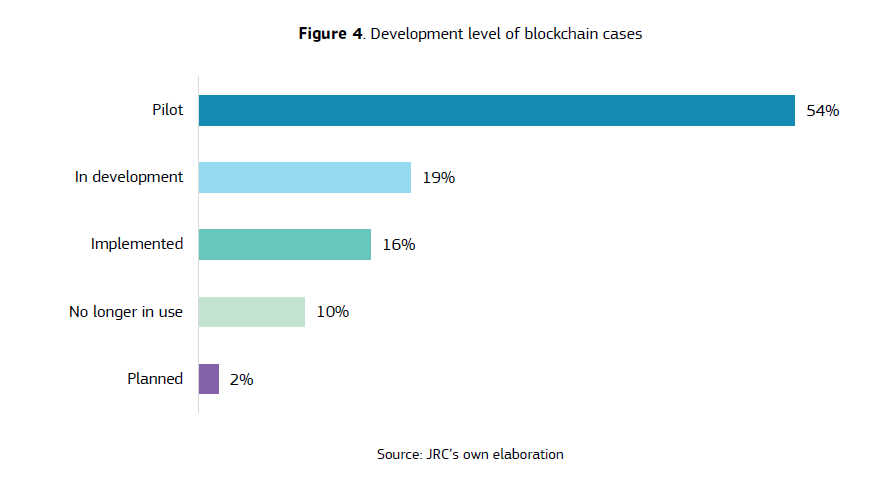
That's an important distinction. Transactions can be recorded, as shown by a blockchain proof of concept. A government system must also decide who has legal authority, who runs the network, how old records are entered, how errors are corrected, and how the system integrates with the existing infrastructure.
The argument in India highlights the same issue with policy. India's RBI Rejects Crypto Legal Status Before Finance Panel demonstrates how unresolved legal recognition issues can coexist with technological advancement.
Sweden’s Blockchain Land Registry Pilot
In order to test blockchain for mortgage and real estate transactions, Landshypotek Bank, SBAB, Telia, ChromaWay, and Kairos Future collaborated with Sweden's national Mapping, Cadastre, and Land Registration Authority, Lantmölliet. After the first project's completion in 2016, a second phase of development and testing took place.
There was a strong draw. The study investigated the possibility of reducing the number of middlemen and steps in property transfers through a shared digital procedure. In particular, the 2017 testbed investigated mortgage-deed procedures and blockchain-based real estate transactions.
However, Sweden did not adopt the experiment as its national land-registration system. According to the OECD's case study, the project did not grow a sizable user base and was put on hold in 2018–2019 after accomplishing its primary trial goal.
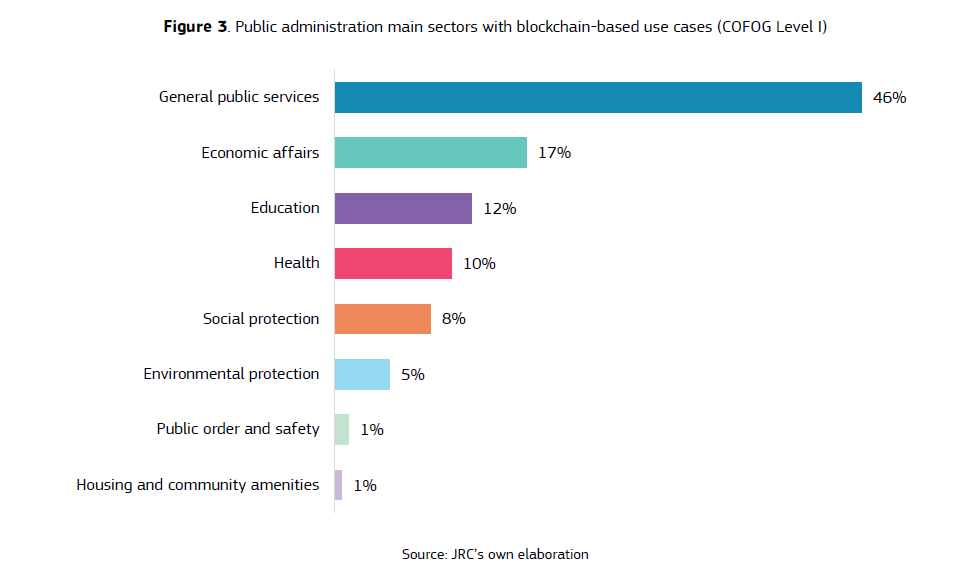
Blockchain's technical failure is not the lesson to be learned. The reason for this is that the technology was merely a part of a much bigger institutional process. Legally binding documentation, identity confirmation, contracts, banking, taxation, and dispute settlement are all necessary for land ownership. Blockchain layers are not eliminated when one layer is added.
The project itself projected potentially significant savings; Kairos Future reported savings of up to €100 million, although such savings were not actual national savings, but rather the potential of a revamped process.
This is precisely the point at which the Indian MP Raghav Chadha's Asset Tokenisation Bill 2026 becomes pertinent, i.e., tokenisation necessitates the legal acknowledgement of the rights that are represented by a token, not just a blockchain database.
Sierra Leone’s Blockchain Voting Experiment
Sierra Leone is another often misinterpreted example.
The National Electoral Commission requested blockchain company Agora to participate in an independent pilot project for the March 2018 presidential election as an international observer. In order to record votes from a sample of polling places on a blockchain, Agora claims that its protocol was largely implemented. It wasn't the official national voting infrastructure of the nation.
That difference significantly alters the narrative.
Agora said that its system exhibited third-party verification of election data and generated results from the sampling area days ahead of the hand tally.
However, revamping a national election system is somewhat different from a demonstration that covers a sample of voting places.
Voter authentication, ballot secrecy, cybersecurity, device security, connectivity, election law, independent audits, dispute settlement, and public trust are among the issues raised by expanding voting technologies that a small pilot cannot address.
Blockchain may make it challenging to change recorded data. It cannot, by itself, ensure the validity of the first vote that was submitted into the system. This is the traditional "garbage in, garbage out" issue with government blockchain initiatives.
The more general lesson also relates to Why Smaller Countries Are Adopting Crypto Faster, i.e., faster experimentation does not always result in scalable national infrastructure, but smaller jurisdictions can occasionally move more quickly due to lower institutional and regulatory coordination costs.
Venezuela’s Petro Experiment
The Swedish and Sierra Leonean initiatives were essentially different from Venezuela's Petro. It was a digital asset supported by the government designed to establish a substitute financial system in the event of a serious economic and sanctions crisis.
The introduction was supported by Venezuela's 2018 official gazette, which cited the Petro whitepaper, the nation's blockchain observatory, and the asset's legislative framework.
The Petro was marketed as a sovereign cryptocurrency supported by the natural resources of Venezuela. Its supporting model included references to oil and other strategic commodities in contemporary documentation.
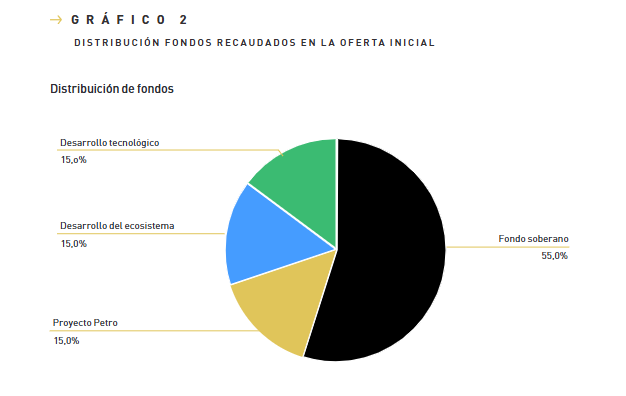
Blockchain technology wasn't the only barrier it faced. The Petro was specifically categorised by the U.S. Treasury's OFAC as a digital currency, coin, or token created by or for the Venezuelan government in accordance with Executive Order 13827, which was issued by the United States in March 2018.
This immediately caused an issue with international adoption.
Additionally, the Petro had a more serious credibility issue because economic and legal documentation did not offer a simple and widely recognised method by which holders could enforce the purported commodity backing. Inconsistencies between Petro's legal framework and its whitepaper on holders' rights were later brought to light by Venezuelan legal research.
Thus, the experiment highlights a crucial point: merely adding a national pledge to a ledger does not create trust for a government-issued blockchain asset.
The contrast with regulatory developments elsewhere is instructive. Japan Treats Crypto Like Stocks in Major Policy Shift, and Japan Passes Crypto ETF Bill, Cuts Crypto Tax Rate show how legal classification, investor protection and market rules can be developed alongside digital assets rather than leaving technology to operate in a legal vacuum.
Why These Pilots Failed to Scale?
Five issues repeat in all three cases.
Before the institutional architecture was established, technology was first tested. Monetary policy, electoral law, and property law issues cannot be resolved by a blockchain.
Second, pilots frequently optimise the transaction rather than the process as a whole. Digital property procedures could be shown in Sweden, but national adoption necessitated integration with all property transfer-related institutions.
Third, the issue of "garbage in, garbage out" continues. Only when the data entered into an immutable record is correct, authorised, and legally significant is it helpful.
Fourth, at scale, procurement and interoperability become more challenging. Connecting various stakeholders and current systems is essential to operationalisation, according to the World Bank's blockchain experiments. Its disbursement-traceability prototype made it clear that the current version of the prototype was not ready for production.
Fifth, adoption may be determined by regulation. Venezuela serves as an example of how a government blockchain project, regardless of its technical design, can be undermined by sanctions and legal ambiguity.
For this reason, will India regulate cryptocurrency? What to Expect from Monsoon Session is important to the larger conversation because, in the end, technology policy becomes a matter of institutional accountability, jurisdiction, compliance, and investor protection.
What Successful Government Blockchain Needs
The best government blockchain initiatives should start with a specific administrative need rather than just a desire to embrace blockchain.
The more recent experience with FundsChain from the World Bank provides a helpful counterexample. Before expanding to about 250 projects, its blockchain-based system for tracking development funds was tested across 13 projects in 10 countries.
It's important to follow this sequence: test a defined procedure, assess its benefits, integrate current systems, and then grow.
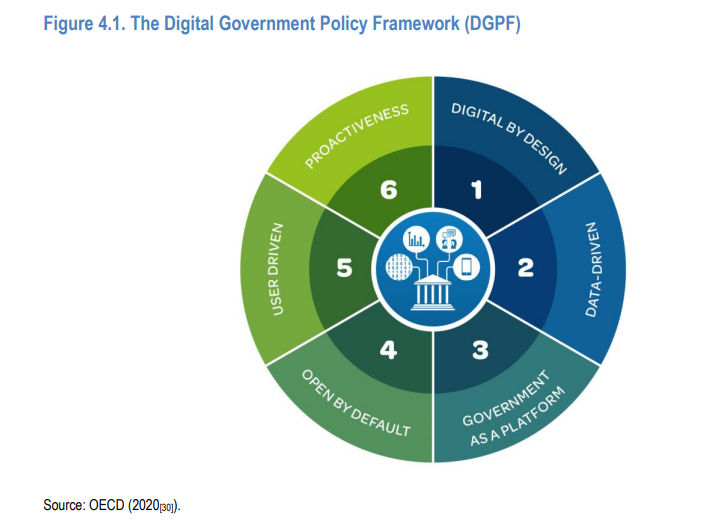
Digital foundations that are interoperable are also necessary for governments. The World Bank's 2026 Digital Public Infrastructure program places more emphasis on data-sharing infrastructure, payments, and reusable digital IDs than on discrete technological initiatives.
This also holds for regulations. The Senate's CLARITY Act for Crypto Regulation serves as an example of how establishing regulatory roles can be just as crucial as the blockchain technology itself.
Therefore, government blockchain will only grow when technology, legislation, institutions, data standards, procurement model, and user incentives all grow at the same time.
The question of whether or not governments can create blockchain pilots is no longer relevant. Clearly, they can.
The more difficult question is whether they can create the institutional framework needed to sustain those pilots when the demo is over.
If you find any issues in this article or notice missing information, please feel free to reach out at team@etherworld.co for clarifications or updates.
To promote your Web3 articles, events, and projects, you may reach out anytime via EtherWorld PR for submissions and collaboration.
Related Articles
- Why Smaller Countries Are Embracing Crypto Faster?
- Crypto Fundamentals Outpacing Prices: Is the Market Missing Adoption?
- Crypto Payments Are Mainstream, but Who's Actually Paying?
- Best Crypto DEXes Every DeFi Trader Should Know
- Top 10 Indian Crypto Exchanges Every Investor Should Know
To follow blockchain news, track Ethereum protocol progress, and read our latest stories, subscribe to our weekly today.
Join the EtherWorld & Avarch Internship Program and build your career in blockchain, content, social media, video, podcast editing, or operations. Send your resume and brief introduction to contact@etherworld.co.
Disclaimer: The information contained in this website is for general informational purposes only. The content provided on this website, including articles, blog posts, opinions, & analysis related to blockchain technology & cryptocurrencies, is not intended as financial or investment advice. The website & its content should not be relied upon for making financial decisions. Read full disclaimer & privacy policy.
To stay updated on blockchain news, Ethereum protocol progress, and our latest stories, subscribe to our weekly digest and YouTube channel for ELI5 content.
To promote your Web3 articles, events, project updates, and Press Releases, reach out anytime via EtherWorld PR for submissions and collaboration. For other queries, email contact@etherworld.co.
If you’d like to support our work, share the content and consider donating at avarch.eth.
Join our community on Discord and follow us on Twitter, Facebook, LinkedIn & Instagram.

 ×
×

Author

Nidhi Kumari is a Web3 content writer at EtherWorld.co, tracking ecosystem developments, funding activity, and market trends shaping the crypto space.