India Moves Faster on Asset Tokenisation
India is moving from tokenisation pilots to real financial infrastructure, with tokenised bonds, gold, land and asset-backed use cases gaining momentum.
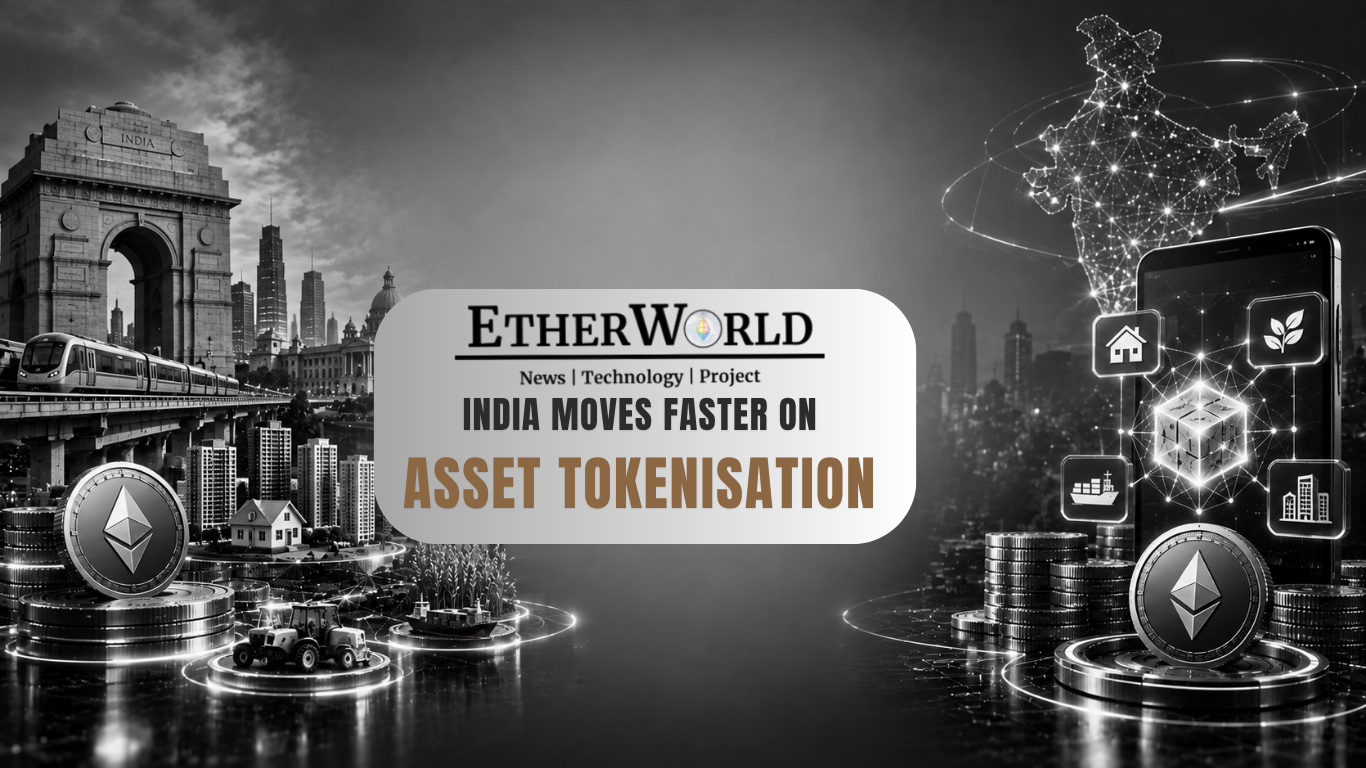
At the 7th Global Fintech Fest 2026, policymakers and industry leaders positioned tokenisation, AI, and quantum computing as pillars of India’s financial architecture. Moving beyond theoretical blockchain pilots, regulatory bodies are actively testing frameworks for tokenised bonds, gold, and real-world assets (RWAs).
While authorities are starting to work on the legal and regulatory framework necessary to advance tokenised bonds, gold, and real-world assets, India is already testing them.
Tokenisation Is Moving From an Idea to Something People Can Use
When considering tokenisation from the perspective of ownership rather than cryptocurrency, the argument is becoming stronger. An asset can be transferred between a bank, lender, insurer, or marketplace together with its ownership record, history, and regulations. That might be true for a bond, a gram of gold, real estate, or other tangible and financial assets.
This model has previously been tested by CoinDCX. One troy ounce of allocated physical gold is represented by each token in the tokenised gold SIP, which uses XAUT. The initial investment is only ₹100. Hence, the idea is to link an on-chain asset to something that Indian investors are already familiar with, like a systematic investment plan.
Great to see tokenisation take centre stage at the Global Fintech Fest this year, with PM @narendramodi ji, @NandanNilekani and several other leaders speaking about its potential.
— Sumit Gupta (@smtgpt) September 15, 2026
My team and I have been building in the blockchain space for over eight years now. A few thoughts…
Through on-chain perpetual contracts that track equities and indices, including assets like Nvidia, the company has also been exploring global futures. Although these initiatives are still in their early stages, they demonstrate how tokenised markets may someday provide Indian users with access to assets outside of conventional domestic investment channels.
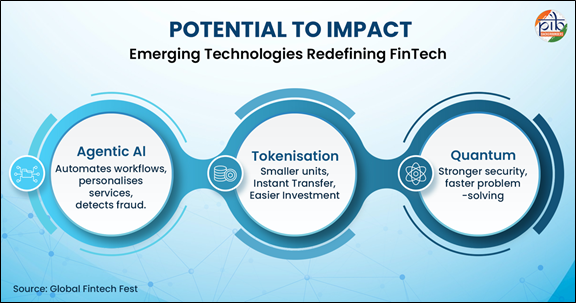
Technologies like Agentic AI, tokenisation and quantum are opening new possibilities in the financial sector. pic.twitter.com/BDIKrCivZK
— PMO India (@PMOIndia) September 8, 2026
This broader change also aligns with the idea presented in India Is Crypto’s Largest Market, Says Coinbase CEO, wherein the country's expanding digital asset activity offers crucial background for the development of new blockchain-based financial products.
Demat 2.0 Shows India Is Putting Tokenisation Into Practice
At the Global Fintech Fest, RBI and SEBI provided the strongest evidence of the change. Demat 2.0, India's first tokenised corporate bond pilot, is now using blockchain technology and is linked to the wholesale CBDC system for settlement.
UPI is a major champion of India's FinTech story. pic.twitter.com/2ppzcyb7ZF
— PMO India (@PMOIndia) September 8, 2026
The total value was ₹1,025 crore after REC issued ₹500 crore, L&T issued an additional ₹500 crore, and IIFL Finance issued ₹25 crore. In comparison to India's entire bond market, the numbers are small, but at this point, the mechanics are more important. The pilot reduces the traditional settlement gap by combining delivery and payment.
As mentioned in SEBI Launches Demat 2.0 for Tokenised Corporate Bonds, the bonds maintain their current legal and financial attributes, while the foundational infrastructure utilises a permissioned distributed ledger. SEBI has been gearing up for this progression, as outlined in India’s SEBI Plans to Tokenise Corporate Bonds.
The subsequent question is whether this can extend beyond just issuance to encompass secondary trading, involvement from retail investors, and automated servicing. This is where smart contracts may prove especially beneficial, managing coupon disbursements, ownership records, and redemptions without eliminating the existing regulatory framework.
India is taking its fintech journey to new heights, with innovation and inclusion at its core. Addressing the Global Fintech Fest 2026 in Mumbai. https://t.co/pMhokoCBjG
— Narendra Modi (@narendramodi) September 8, 2026
Maharashtra Wants to Put Land Onchain
Maharashtra is elevating the concept to a more complex level. Chief Minister Devendra Fadnavis revealed the proposed Maharashtra Digitisation and Exchange of Land Token Assets, also known as the DELTA Act, which aims to create a legal structure for the tokenisation of land and other immovable assets.
Unlocking Property Value through the DELTA Act!
— Devendra Fadnavis (@Dev_Fadnavis) July 20, 2026
Chaired a meeting regarding the draft of 'The Maharashtra Digitisation and Exchange of Land Token Asset Act (DELTA Act)' in Mumbai, today.
As Maharashtra moves towards achieving the goal of becoming a US$1 trillion economy by… https://t.co/SVPXENl9f7
The proposed framework will incorporate expertise from SEBI, BSE, NSE, as well as professionals from industry, technology, law, and academic fields. Fadnavis articulated the objective as unlocking productive capital, enhancing transparency, and stimulating economic activity by transforming dormant wealth, with an estimated land value of about ₹50 lakh crore.
EtherWorld has previously examined Maharashtra Moves to Put Land Onchain With DELTA Act,” while Maharashtra’s DELTA Act Could Bring Real Estate Onchain analyses the possible effects on property markets.
Additionally, the concept aligns with Parliament's increasing interest in the topic. The proposed asset tokenisation law by MP Raghav Chadha gives the debate a national policy dimension by focussing on issues including issuance, trading, custody, and investor protection. Indian MP Raghav Chadha Introduces Asset Tokenisation Bill 2026 discussed the development.
Maharashtra's initiative is especially noteworthy because land cannot just be stored on a blockchain and turned into a token. Making sure the digital representation links to legally recognised property rights is the challenging aspect.
From Gold and Bonds to Cattle, Loans & Public Infrastructure
Perhaps the best sign of where this could go came from Nandan Nilekani's 7th Global Fintech Fest 2026 speech. His illustrations extended beyond financial products. A cattle token might contain the animal's name, ownership, health details, and milk production, providing lenders with useful data for evaluating the animal.
Similarly, warehouse receipts may provide data on the quantity and quality of stored produce. Instead of always being prepared as unique paperwork, loan documents might be standardised as smart contracts and used across marketplaces.
In agriculture, agritech platforms like Arya.ag are piloting blockchain-based electronic Negotiable Warehouse Receipts (e-NWRs) to streamline collateral pledges and grain-backed lending.
Beyond finance, similar broader experimentation is emerging. While Maharashtra Becomes First State to Recognize Crypto highlights the state's broader engagement with digital assets, AIIMS Delhi Brings Blockchain to Faculty Recruitment demonstrates the application of blockchain for institutional procedures.
However, tokenisation is emerging at the policy level in parallel with an ongoing discussion about cryptocurrency regulation. The central bank's view can be read in India's RBI Rejects Crypto Legal Status Before Finance Panel, while the ongoing call for more precise regulations is highlighted in India Needs Clear Crypto Rules, Says GNLU Report.
The GFF discussions also demonstrated how technology and safety are intrinsically connected. PM Modi emphasised a Fintech Consumer Protection Index, improved industry-regulator communication, voluntary ethical data protection norms, and cybersecurity. Separately, Sitharaman characterised AI as a double-edged sword, citing fraud, cyberthreats, and systemic issues while stressing that security measures must constantly change while keeping humans informed.
Just as UPI leveraged public digital rails to scale private payment solutions, India is testing a hybrid model for tokenisation. Success will depend on reconciling on-chain ownership with statutory property law, building regulatory bridges between SEBI and the RBI, and ensuring deep secondary market liquidity.
If you find any issues in this article or notice missing information, please feel free to reach out at team@etherworld.co for clarifications or updates.
To promote your Web3 articles, events, and projects, you may reach out anytime via EtherWorld PR for submissions and collaboration.
Related Articles
- India Records $19B in Taxable Crypto Activity
- India Parliament Panel Cancels August 27 Crypto Hearing
- India Issues New Crypto Tax Rules From 2026
- India to Ban Bitchat: Jack Dorsey Pushes Back
- India Is Crypto’s Largest Market, Says Coinbase CEO
To follow blockchain news, track Ethereum protocol progress, and read our latest stories, subscribe to our weekly today.
Join the EtherWorld & Avarch Internship Program and build your career in blockchain, content, social media, video, podcast editing, or operations. Send your resume and brief introduction to contact@etherworld.co.
Disclaimer: The information contained in this website is for general informational purposes only. The content provided on this website, including articles, blog posts, opinions, & analysis related to blockchain technology & cryptocurrencies, is not intended as financial or investment advice. The website & its content should not be relied upon for making financial decisions. Read full disclaimer & privacy policy.
To stay updated on blockchain news, Ethereum protocol progress, and our latest stories, subscribe to our weekly digest and YouTube channel for ELI5 content.
To promote your Web3 articles, events, project updates, and Press Releases, reach out anytime via EtherWorld PR for submissions and collaboration. For other queries, email contact@etherworld.co.
If you’d like to support our work, share the content and consider donating at avarch.eth.
Join our community on Discord and follow us on Twitter, Facebook, LinkedIn & Instagram.

 ×
×

Author

Nidhi Kumari is a Web3 content writer at EtherWorld.co, tracking ecosystem developments, funding activity, and market trends shaping the crypto space.